

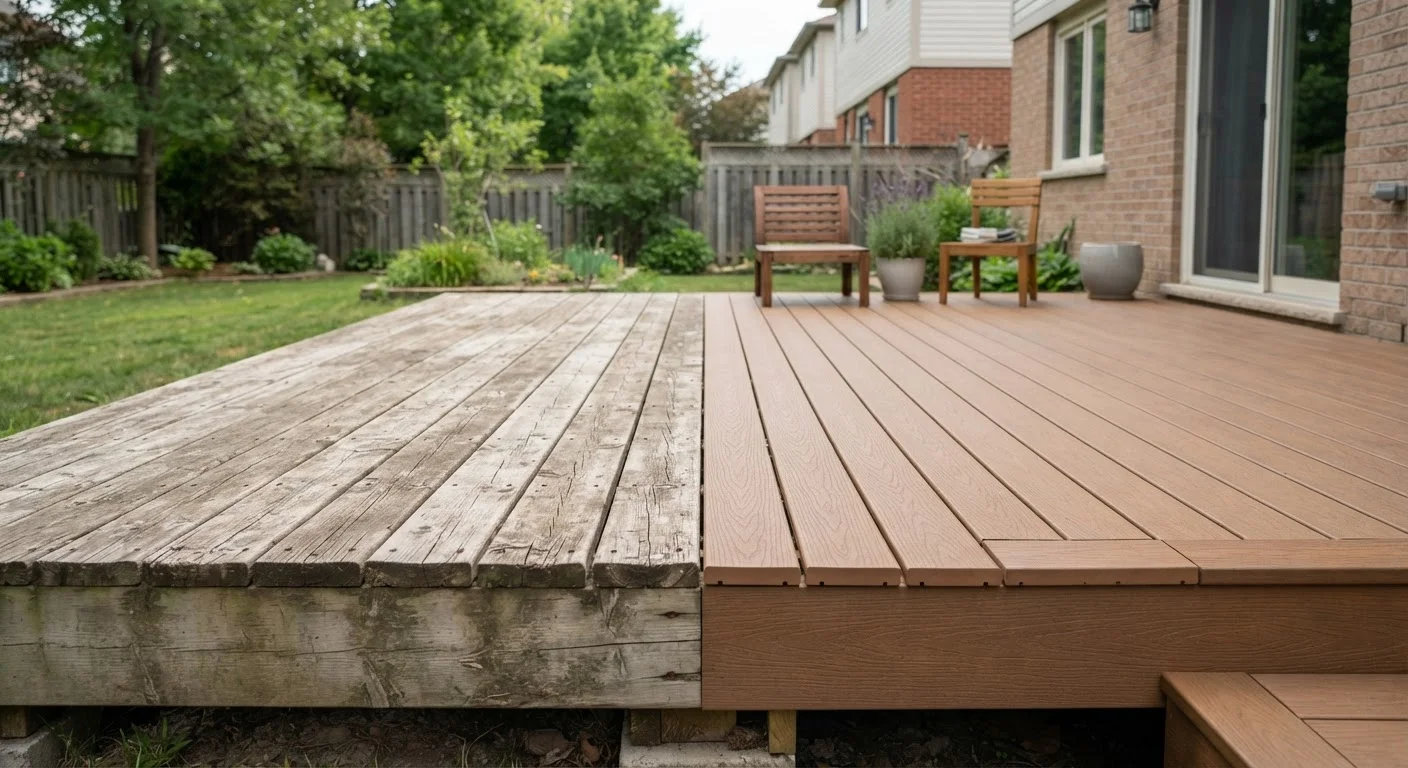
Our Verdict
Pressure-treated wood and composite decking each suit a different type of homeowner. Wood rewards hands-on DIYers willing to invest time each season, while composite suits those who prefer a lower-touch routine after installation. Neither material is maintenance-free, but their upkeep demands differ significantly in frequency, skill level, and long-term cost.
| Best for | Recommended |
|---|---|
| Budget-conscious homeowners comfortable with seasonal DIY tasks | Pressure-Treated Wood |
| Homeowners wanting minimal routine upkeep after installation | Composite Decking |
| Those in high-moisture or humid climates needing rot resistance | Composite Decking |
| Homeowners who want flexibility to refinish or change the deck's appearance | Pressure-Treated Wood |
Understanding the Two Materials
Pressure-treated wood is dimensional lumber - most commonly Southern yellow pine - that has been infused with chemical preservatives under high pressure to resist rot, insects, and fungal decay. It's widely available, straightforward to cut and fasten, and represents one of the most common decking materials used in residential construction across the United States.
Composite decking is an engineered product made from a blend of wood fibers (or cellulose) and recycled plastic, often with a protective polymer cap layer on higher-end boards. The result is a board that mimics the look of wood while resisting moisture absorption more effectively than natural lumber.
Understanding what each material is made of explains most of their maintenance differences. Wood is organic and reactive; composite is manufactured and more stable. That distinction shapes every maintenance task you'll encounter over the life of the deck.
Routine Maintenance Requirements Compared
| Pressure-Treated Wood | Composite Decking | |
|---|---|---|
| Upfront Material Cost | Lower per square foot | Higher per square foot |
| Annual Maintenance Effort | High - cleaning, sealing, staining | Low - periodic washing only |
| Typical Lifespan | 15-25 years with upkeep | 25-30+ years under normal use |
| Moisture Resistance | Moderate - requires sealing | High - resists absorption well |
| Refinishing Options | Can be sanded, stained, repainted | Cannot be refinished; boards replaced |
| Mold & Mildew Risk | Moderate to high if unsealed | Low to moderate in shaded areas |
| DIY Repairability | Easy - individual board replacement | Moderate - color matching can be difficult |
For pressure-treated wood, the annual maintenance cycle is meaningful. Each spring, homeowners should inspect boards for cracking, checking, and signs of rot at fastener points. Any year the wood shows water absorption rather than beading, it's time to clean and re-seal or re-stain. Skipping this step allows moisture to penetrate deeper into the wood grain, accelerating decay and warping. Boards that cup, split, or develop soft spots need to be replaced individually.
Composite decking's routine is simpler: sweep off debris regularly, and wash the surface with soap and water or a composite-approved cleaner at least once or twice a year. Organic debris left sitting in gaps between boards - leaves, dirt, pollen - can promote mold growth on the surface over time, especially in shaded or humid environments. The key distinction is that composite cleaning is largely cosmetic; pressure-treated wood maintenance is structural.
Test Wood Moisture Before Sealing
Before applying any sealer or stain to pressure-treated wood, splash a small amount of water on the surface. If it beads up, the wood is still sealed and doesn't need recoating yet. If it soaks in quickly, the surface is ready for a fresh application. Applying sealer over a still-sealed deck wastes product and can result in peeling. This simple test saves time and money each season.
Long-Term Durability and Lifespan
A well-maintained pressure-treated wood deck typically lasts 15 to 25 years, depending on climate, ground contact, and how consistently it's cared for. Boards in contact with soil or constantly exposed to standing water will degrade faster regardless of preservative treatment. Modern preservatives - most commonly copper-based compounds after the phase-out of older arsenic-based formulations - are effective, but the wood still needs active stewardship.
Composite decking, particularly capped composite boards, is often engineered to last 25 to 30 years or more under normal residential use, and many manufacturers back their products with long warranties. However, composite is not immune to problems. Fading from UV exposure, staining from cooking grease or tannins, and surface mold in damp climates are all documented issues. Unlike wood, a faded or stained composite board cannot simply be sanded and restained - it must usually be replaced.
For a broader seasonal context on protecting your outdoor structures, see our home maintenance calendar covering year-round upkeep tasks.
Cost Considerations Over Time
15-25 yrs
Pressure-treated wood deck lifespan
Lifespan varies significantly based on climate, maintenance consistency, and ground contact conditions.
25-30+ yrs
Composite decking expected lifespan
Many capped composite products carry manufacturer warranties reflecting this extended durability estimate.
Pressure-treated lumber carries a lower initial material cost per square foot, making it an appealing choice when upfront budget is a constraint. However, the recurring costs of sealers, stains, cleaning solutions, and replacement boards accumulate over time. Factor in the labor if you're not doing the work yourself, and the gap between wood and composite narrows considerably over a 20-year horizon.
Composite decking has a higher initial cost, but its lower annual maintenance burden can offset that premium over the long run. The calculus depends on your local labor rates, how diligent you are about wood maintenance, and how long you plan to stay in the home.
These material trade-offs parallel decisions in other categories - much like weighing natural vs. synthetic fabrics for durability and care requirements. In each case, the right answer depends on your lifestyle and how much ongoing attention you're prepared to give.
This article is for general informational purposes only. Costs, material performance, and maintenance needs vary by region, climate, and specific product. Always verify local building codes and permit requirements before beginning a deck project, and consult a licensed contractor for structural work.
The content on this site is for informational purposes only and is not a substitute for professional advice. Always consult a qualified professional for guidance specific to your situation.