

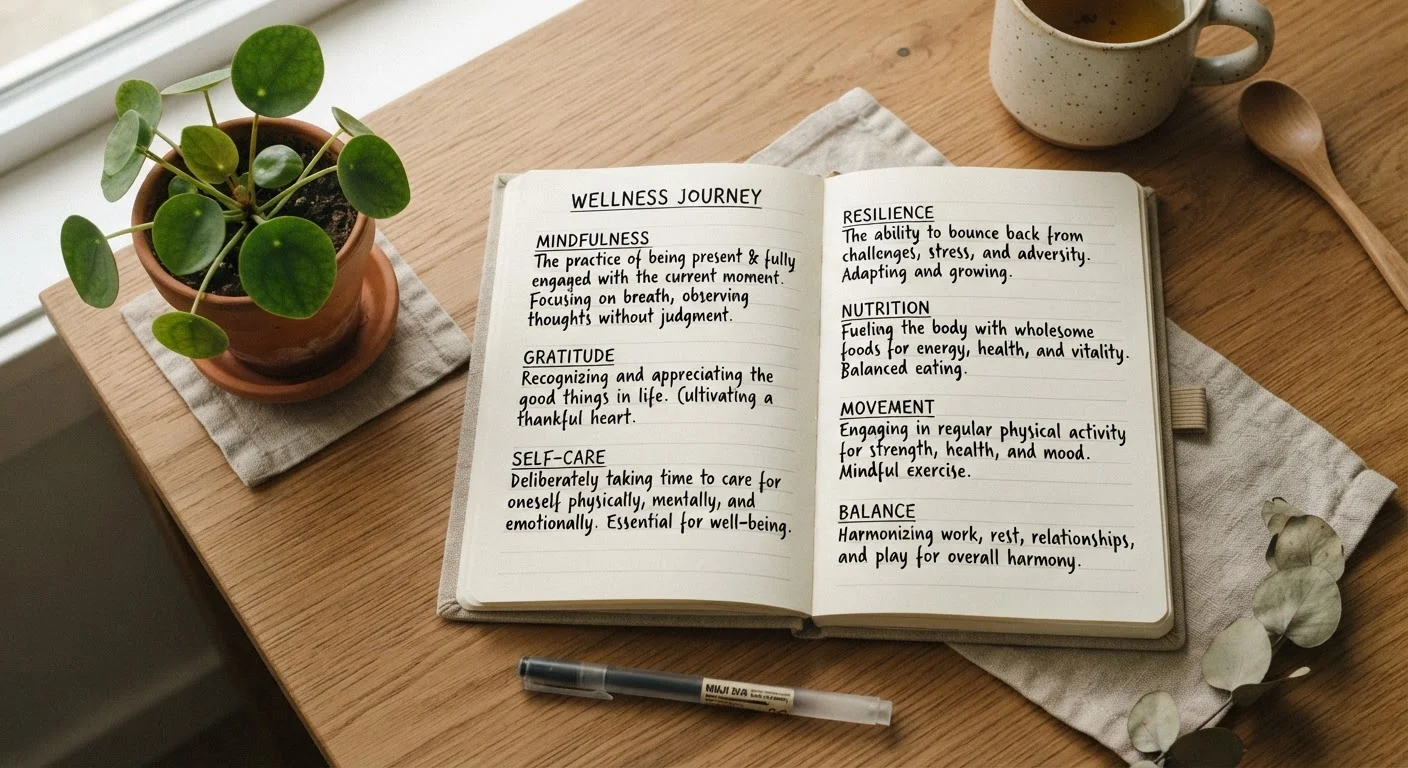
Why This Vocabulary Matters
Mental wellness conversations have their own language - and when that language feels opaque, it can create distance between people and the support they need. Terms from therapy, research, and self-care practice now appear regularly in workplaces, schools, and social media, often without clear definitions attached.
This reference decodes the most commonly encountered concepts so you can use them accurately, understand what practitioners mean when they use them, and engage more confidently in your own wellness journey. If you are looking to move from vocabulary to practice, see our guide to building a daily mental wellness routine.
1 in 5
U.S. adults affected by a mental illness each year
According to the National Institute of Mental Health (NIMH), mental health conditions are among the most common in the United States.
~11 years
Average delay between symptom onset and treatment
Research published in the World Psychiatry journal indicates the median delay between first symptoms and treatment is approximately 11 years, partly due to literacy and awareness gaps.
This article is for informational purposes only and does not constitute medical or clinical advice. Consult a qualified mental health professional for concerns about your own mental health.
Core Terms Defined
The following terms represent some of the most widely used concepts in mental wellness education, therapy, and everyday self-care. Each definition reflects established clinical or research usage.
This Reference Is Not a Clinical Tool
The definitions here are intended for general education, not diagnosis or treatment. Mental health terminology carries precise meanings in clinical contexts that may differ from everyday use. If you are experiencing mental health concerns, consult a licensed mental health professional rather than relying on general definitions.
Many of these concepts overlap - emotional regulation, for example, draws on grounding, distress tolerance, and self-compassion simultaneously. Understanding how they connect is often more useful than memorizing them in isolation. Our article on common mental wellness myths offers helpful context on which ideas have research support and which are more contested.
For practices such as mindfulness and meditation that appear frequently in wellness content, see our side-by-side breakdown of mindfulness vs. meditation. Similarly, journaling approaches for emotional clarity can reinforce many of the skills described above - including behavioral activation and cognitive reframing.
Building a Daily Mental Wellness Routine From Scratch
After learning the vocabulary, this guide helps you put concepts into practice with evidence-informed daily habits anyone can build into their schedule.
Mindfulness vs. Meditation: Sorting Out the Difference
Two of the most commonly confused terms in wellness explained side by side - what each involves, and how they relate to broader emotional regulation.
The content on this site is for informational purposes only and is not a substitute for professional advice. Always consult a qualified professional for guidance specific to your situation.