

How End-to-End Encryption Actually Works
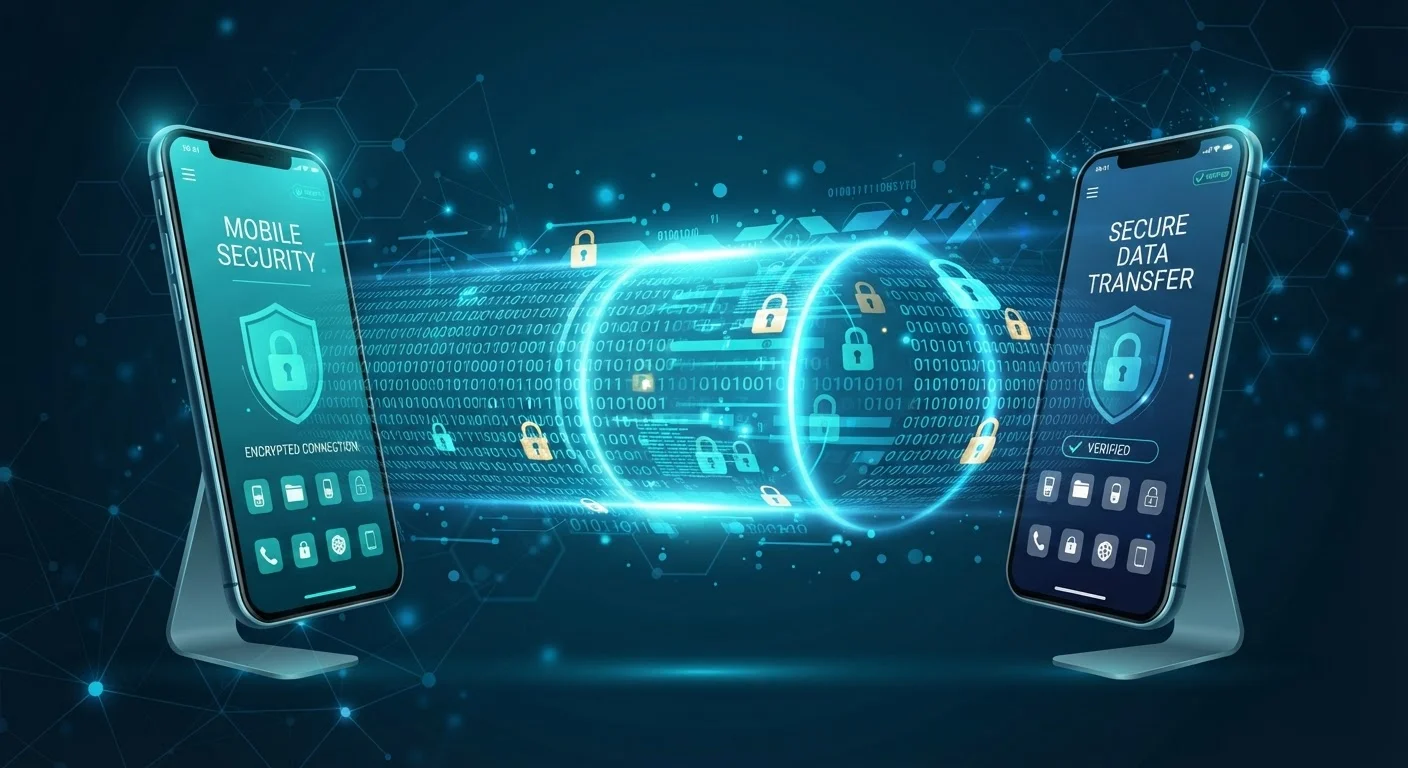
Think of E2EE like a physical lockbox. You lock a message inside using a key only your recipient possesses. Anyone who intercepts the box during delivery sees nothing but an unreadable container — they do not have the key to open it.
In digital terms, encryption converts your readable message (called plaintext) into a scrambled string of characters (called ciphertext) using a mathematical algorithm. The recipient's device holds the only cryptographic key capable of reversing that process. This key exchange happens automatically, so you never need to manage keys manually.
Crucially, the service provider's servers may relay your encrypted message from Point A to Point B, but the servers only ever see the locked box — never the contents. This distinguishes E2EE from standard encryption, where a provider can decrypt your data because they hold the keys.
“Encryption is one of the most important tools we have to protect privacy in the digital age. Without it, every message you send is a postcard anyone along the route can read.”
— Bruce Schneier, Security technologist and author on cryptography and digital privacy
Why This Matters for Everyday Privacy
Personal messages, financial details, medical conversations, and sensitive documents pass through digital channels constantly. Without E2EE, each hop between servers is a potential exposure point — a place where a data breach, an insider threat, or a network intruder could intercept readable content.
E2EE removes that risk by ensuring the message is only ever readable at its origin and destination. Even if a company's servers are breached, attackers harvest only indecipherable ciphertext.
3.2 billion
Records exposed in data breaches annually
Research consistently shows billions of records are exposed each year globally, underscoring why in-transit encryption matters for everyday communications.
81%
Of data breaches involve stolen credentials or weak access controls
According to Verizon's widely cited Data Breach Investigations Report, most breaches exploit access rather than in-transit interception — highlighting that encryption is one layer of a broader security approach.
It is also worth understanding what E2EE does not protect. It secures messages in transit, not messages sitting on an unlocked screen. If someone can physically access your device, your messages may still be visible. Similarly, if the person you are messaging takes a screenshot or saves your conversation, encryption cannot prevent that. For a broader look at where privacy protection begins and ends, see common online privacy misconceptions that many people still believe.
Check Your App's Default Settings
Before assuming your messages are encrypted, check the privacy or security section of your messaging app's settings. Some apps only activate end-to-end encryption in a specific chat mode — it may not be on by default. A quick review of those settings can meaningfully raise your communication security with no technical expertise required.
Recognizing When Your Apps Use It
Not every messaging or email platform applies E2EE, and even among those that do, implementation varies. Some apps enable E2EE by default for all conversations. Others only apply it in a special mode you have to activate manually. Standard email — the kind most people use for work — does not use E2EE by default, which is why sensitive information sent over regular email carries meaningful risk.
Standard Email Is Not End-to-End Encrypted
Most standard email services — including common workplace email platforms — do not apply E2EE by default. The email provider can typically read your messages and may be required to produce them in legal proceedings. For genuinely sensitive communications, a purpose-built E2EE messaging app is generally a more secure channel than regular email.
When evaluating your own communication tools, look for apps that clearly document their encryption approach and have had their claims independently audited by security researchers. Transparency from the developer — including publishing the underlying source code for review — is a positive signal that the encryption is genuine and not just a marketing label.
Understanding the distinction between apps that encrypt messages only on their servers versus those that apply true end-to-end encryption helps you make more deliberate choices about where you share sensitive information.
Frequently Asked Questions
E2EE protects your messages while they travel between devices, meaning no outside party can intercept and read them. However, if someone has physical access to your unlocked device, they can still see your messages. Encryption covers the transmission, not the endpoint itself.
Because the service provider cannot decrypt E2EE messages, they generally cannot hand readable content over to authorities even if legally compelled. However, metadata — such as who you messaged and when — may still be accessible in some cases.
Several widely used apps apply E2EE, including Signal, WhatsApp, and Apple's iMessage. However, implementations differ — some apps only encrypt certain message types, and some require you to enable a special mode manually.
Not exactly. HTTPS encrypts data traveling between your browser and a website's server, but the website itself can still read that data. E2EE goes further by ensuring only the communicating parties — not any intermediate server — can decrypt the content.
For everyday users, the processing time required for E2EE is negligible on modern devices. You are unlikely to notice any meaningful delay in messages or voice calls due to encryption alone.
The content on this site is for informational purposes only and is not a substitute for professional advice. Always consult a qualified professional for guidance specific to your situation.