

Option A
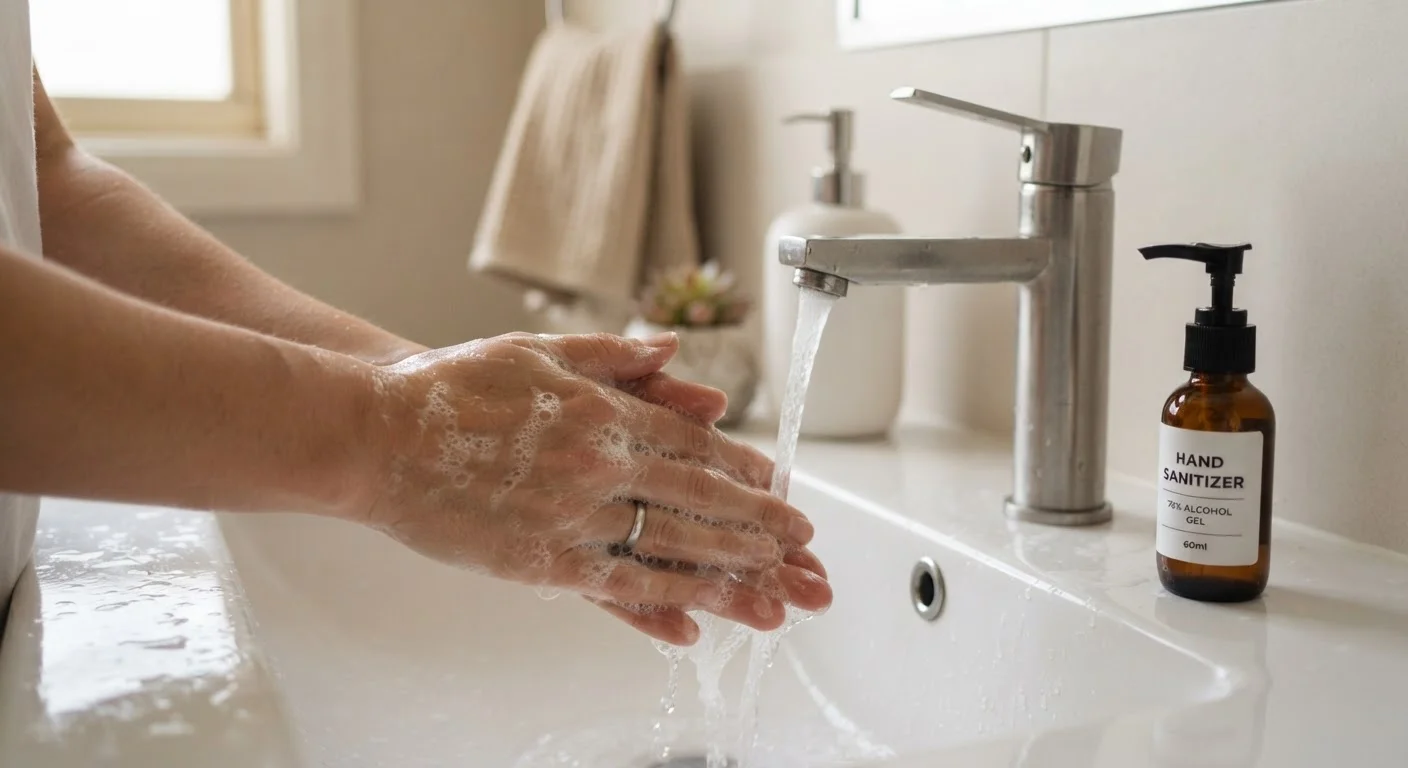
Hand Washing with Soap and Water
The gold-standard method for thorough hand hygiene.
Best for: Situations where hands are visibly dirty, greasy, or potentially contaminated with certain pathogens that sanitizers can't neutralize.
Option B
Alcohol-Based Hand Sanitizer
The quick, convenient option for on-the-go hygiene.
Best for: Situations where soap and water aren't accessible and hands are not visibly soiled.
How Each Method Actually Works
Soap and water don't kill germs so much as they remove them. Soap molecules have one end that attracts water and another that attracts oils. When you scrub, soap surrounds dirt, bacteria, and viruses — including the lipid (fatty) envelope of many viruses — and running water rinses everything away. The mechanical action of rubbing your hands together is a significant part of what makes it effective.
Alcohol-based hand sanitizer works differently: it denatures proteins in bacterial and viral cells, essentially breaking them down so they can no longer function. For this to work reliably, the CDC advises using a product with at least 60% alcohol. Unlike soap, sanitizer doesn't remove anything — it neutralizes pathogens on the surface, but anything physically present (dirt, grease, certain spore-forming bacteria) largely stays put.
This distinction matters more than most people realize. Both methods protect you, but through completely different mechanisms — and each has situations where the other simply can't substitute.
| Criterion | Hand Washing | Hand Sanitizer |
|---|---|---|
| Primary mechanism | Physically removes germs and debris | Chemically deactivates germs |
| Effectiveness on dirty hands | Highly effective | Limited — soil reduces efficacy |
| Works against norovirus / C. diff | Yes | No — these are alcohol-resistant |
| Requires water source | Yes | No |
| Recommended contact time | 20 seconds of scrubbing | 20–30 seconds until dry |
| Skin dryness risk | Moderate with frequent use | Moderate; many formulas include moisturizers |
| Portability | Requires a sink | Highly portable |
When Soap and Water Is the Clear Winner
There are specific scenarios where soap and water isn't just preferable — it's the only method that adequately does the job.
- Visibly dirty or greasy hands: Sanitizer can't cut through physical soil. You need the surfactant action of soap.
- After using the toilet: Public health guidelines are consistent here — soap and water is the recommended standard.
- Before and after handling raw meat or eggs: Mechanical removal reduces cross-contamination risk more reliably than sanitizer alone.
- Exposure to Clostridioides difficile (C. diff) or norovirus: These pathogens are notably resistant to alcohol-based sanitizers. Soap and water is the recommended approach in these cases, per CDC guidance.
- After exposure to pesticides or heavy chemicals: You need physical removal, not just surface deactivation.
Technique matters here too. The CDC recommends lathering for at least 20 seconds — covering the backs of hands, between fingers, and under nails — before rinsing thoroughly.
When Sanitizer Is a Solid Stand-In
Sanitizer earns its place in everyday life, and for good reason. When hands aren't visibly dirty and a sink isn't nearby, a properly formulated sanitizer does a reliable job against most common bacteria and enveloped viruses, including influenza and coronaviruses.
Practical situations where sanitizer shines:
- After touching shared surfaces in public (door handles, carts, elevator buttons)
- Before eating a quick snack when no sink is available
- Between routine tasks in settings like offices or classrooms
- While traveling, commuting, or running errands
To use it effectively, apply enough product to cover all surfaces of both hands (about a dime-to-quarter-sized amount), then rub hands together until completely dry — usually 20–30 seconds. Don't wipe it off early; the contact time is what makes it work.
Sanitizer Isn't a Universal Substitute
Even high-quality alcohol-based sanitizers have documented limitations against specific pathogens. The CDC specifically calls out norovirus, Cryptosporidium, and C. difficile as examples where soap and water is the better option. If you're in a situation involving any of these — like caring for someone with a stomach illness — reach for the sink.
One more thing worth mentioning: frequent use of either soap or sanitizer can strip moisture from your skin. If you notice dryness or irritation, a fragrance-free hand cream applied after washing can help maintain your skin barrier. For a broader look at how cleansing habits affect skin, see our piece on how daily washing affects your skin barrier.
The Bottom Line: It's Not One or the Other
Framing this as a competition misses the point. Hand washing and hand sanitizer are complementary tools, each suited to specific circumstances. Keeping both in your routine — soap and water when you can, sanitizer when you can't — covers most everyday hygiene needs without overthinking it.
What matters most is consistency and technique, not which option you choose in low-stakes moments. Rough, cursory hand washing for three seconds beats neither method. Likewise, thorough sanitizer application beats a perfunctory rinse at the sink.
If you're curious about how ingredients in personal care products generally compare in terms of safety and effectiveness, our overview of natural vs. synthetic ingredients in personal care offers useful context. And for day-to-day personal care decisions in general — like understanding the difference between deodorant and antiperspirant — the principle is the same: knowing how something works helps you use it more effectively.
This article is for general informational purposes only and does not constitute medical advice. For personal health concerns, consult a qualified healthcare professional.
The content on this site is for informational purposes only and is not a substitute for professional advice. Always consult a qualified professional for guidance specific to your situation.