

Why Table Scrap Myths Are So Persistent
Pet owners absorb food safety advice from a patchwork of sources — social media posts, well-meaning friends, half-remembered warnings. The result is a mix of genuine caution and exaggerated fear, with some truly dangerous foods occasionally slipping through unnoticed. Understanding which risks are real — and which are overstated — helps you protect your pet without unnecessary anxiety.
For a broader look at the ways everyday habits can quietly affect your animal's wellbeing, see small oversights that affect pet health. The Pet Care Basics hub also covers feeding, grooming, and home environment essentials in one place.
Myth
Grapes are a healthy, natural snack I can share with my dog.
Fact
Grapes and raisins are toxic to dogs and have been linked to acute kidney failure, with no safe dose established.
Even small amounts of grapes or raisins can trigger vomiting, lethargy, and kidney damage in some dogs. The mechanism is not fully understood, and not every dog reacts the same way — but because there is no identified threshold considered safe, veterinary guidance is to avoid them entirely. If your dog consumes grapes or raisins, contact your veterinarian or an animal poison control hotline promptly.
Myth
A little garlic is actually good for dogs — it keeps fleas away.
Fact
Garlic and other alliums are toxic to dogs and cats; the flea-prevention claim is not supported by veterinary evidence.
Alliums — including garlic, onions, leeks, and chives — contain compounds that damage red blood cells in both dogs and cats, potentially causing hemolytic anemia. The toxicity is cumulative, meaning small repeated doses can build to dangerous levels over time. The idea that garlic repels fleas is a persistent folk remedy with no credible clinical backing. Effective, safe flea prevention options exist and should be discussed with your veterinarian.
Myth
If a food isn't on a 'toxic' list, it's fine to share freely.
Fact
Many foods safe in small amounts become problematic in larger quantities or when seasoned, and caloric impact must always be considered.
Plain cooked meat, certain vegetables like carrots or green beans, and plain rice are generally tolerated by dogs in modest amounts. However, 'safe' does not mean 'unlimited.' Rich or fatty foods — even non-toxic ones like bacon fat or buttered bread — can trigger pancreatitis in susceptible dogs. Always consider how the food was prepared, what was added to it, and how it fits within your pet's total daily caloric intake.
Myth
Cats can eat anything dogs can eat, so the same rules apply.
Fact
Cats have distinct metabolic needs and food sensitivities; several foods safe for dogs are harmful to cats.
Cats are obligate carnivores with different enzymatic pathways than dogs. They cannot efficiently process certain plant compounds, and they are particularly sensitive to alliums. Additionally, onion toxicity affects cats at lower thresholds than many owners realize. Raw fish fed regularly can deplete thiamine (vitamin B1) in cats, leading to neurological problems. What works as an occasional treat for a dog may pose a real risk for a cat.
Myth
Xylitol is only found in chewing gum, so it's easy to avoid.
Fact
Xylitol appears in a growing range of products including certain peanut butters, baked goods, vitamins, and oral care products.
Xylitol is a sugar alcohol used as a low-calorie sweetener, and its use in packaged foods has expanded significantly. For dogs, even small amounts can cause a rapid drop in blood sugar (hypoglycemia) and, in larger doses, liver failure. Always check ingredient labels on any product before sharing with your dog — especially 'sugar-free' versions of foods. If you give your dog peanut butter as a treat or in a puzzle toy, verify the label each time you buy a new jar, as formulas change.
The Real Risks You Should Not Dismiss
While some warnings are overstated, others deserve serious attention. Xylitol — an artificial sweetener found in sugar-free gum, certain peanut butters, and baked goods — can cause a rapid, life-threatening drop in blood sugar in dogs even in very small amounts. Grapes and raisins have been linked to acute kidney failure in dogs, with no established safe dose identified. Onions, garlic, and other alliums damage red blood cells in both dogs and cats, with toxicity accumulating over time even from small repeated servings.
Xylitol Is a Medical Emergency
If your dog ingests any product containing xylitol — even a small amount — treat it as an emergency. Symptoms including vomiting, weakness, and collapse can develop within 30 minutes. Contact your veterinarian or the ASPCA Animal Poison Control Center (888-426-4435) immediately. Do not wait to see if symptoms develop before seeking help.
Seasonings compound these risks: a plain cooked chicken breast is generally harmless to dogs, but the same chicken prepared with garlic powder, onion flakes, or heavy salt is not. The cooking method and added ingredients matter as much as the base food itself.
For a systematic check of household hazards beyond the kitchen, the pet-safe home checklist walks through every room where risks can hide.
Top 2
Categories in ASPCA poison control calls
According to the ASPCA Animal Poison Control Center, human foods and people's medications consistently rank among the most common reasons pet owners call the hotline each year.
~10%
Maximum treat contribution to daily calories
Veterinary nutritionists generally recommend that treats and extras — including table scraps — make up no more than 10% of a pet's total daily caloric intake to maintain a balanced diet.
How Table Scraps Affect Nutrition and Behavior Over Time
Even when individual scraps are not toxic, habitual feeding from the table creates two longer-term problems. First, human food tends to be calorie-dense relative to a pet's size. A small cube of cheese that seems trivial to an adult human can represent a significant portion of a ten-pound cat's daily caloric needs. Over weeks and months, this contributes to weight gain and the health conditions that follow it.
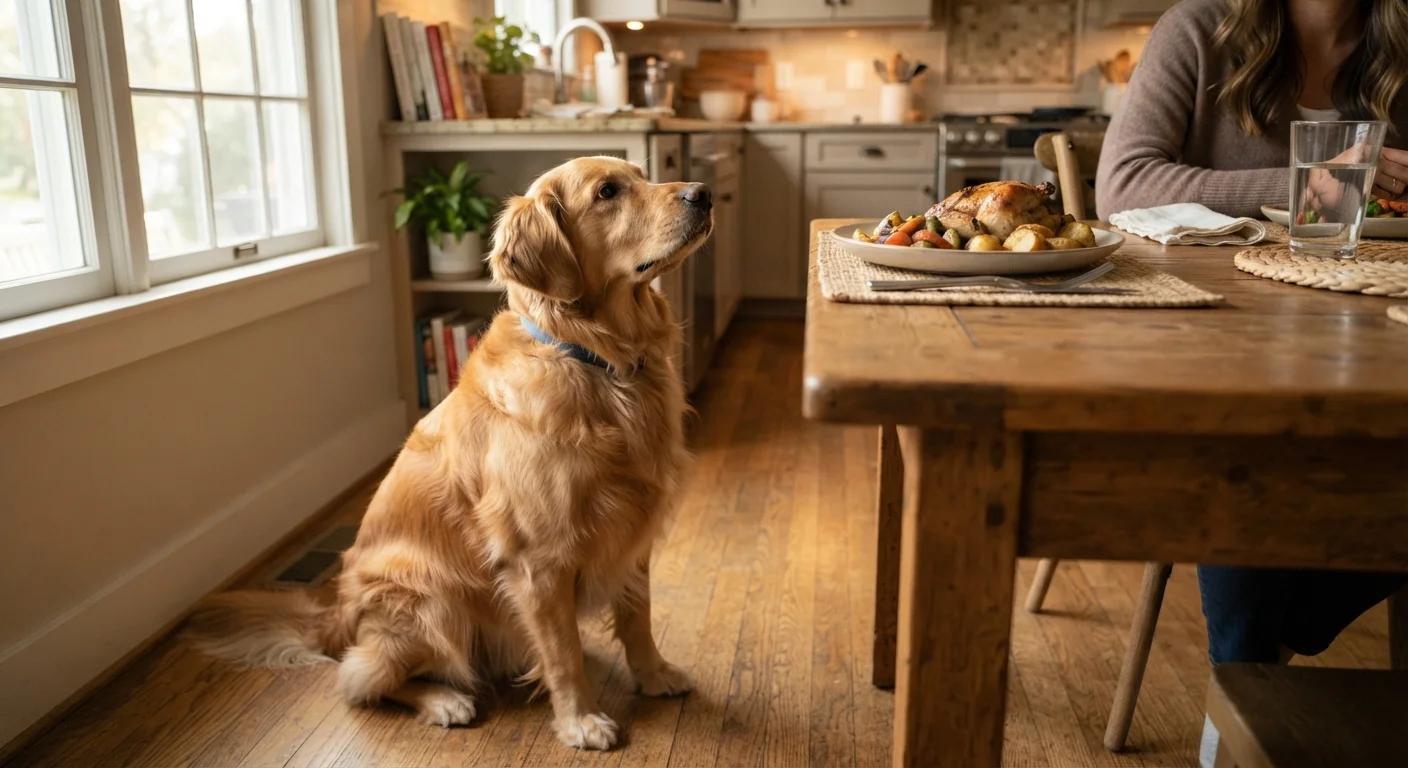
Second, consistent scrap feeding reinforces begging. Pets learn quickly that persistence at the table produces results, which makes mealtimes stressful for owners and can escalate to food-guarding behavior. A predictable feeding structure — separate from the human meal — supports calmer behavior and better digestion. Our article on why feeding consistency matters explains the physiological and behavioral reasons routine outperforms improvisation.
Fatty Scraps Can Trigger Pancreatitis
Rich, high-fat foods like meat drippings, bacon, or buttered bread can cause pancreatitis in dogs — a painful and potentially serious inflammation of the pancreas. Breeds such as Miniature Schnauzers and Cocker Spaniels have higher reported susceptibility, but any dog can be affected. Signs include vomiting, hunched posture, and abdominal pain. If you notice these symptoms after a rich meal or treat, consult your veterinarian.
If you're evaluating whether to use scheduled meals or free access to food, free feeding vs. scheduled meals lays out the trade-offs for both dogs and cats clearly.
The content on this site is for informational purposes only and is not a substitute for professional advice. Always consult a qualified professional for guidance specific to your situation.