

Why Pet Food Labels Are Worth Decoding
Walking the pet food aisle can feel like navigating a marketing maze. Bags shout claims about "real meat," "ancient grains," and "ancestral diets" while the actual nutritional information sits in small print on the side panel. Knowing how to read that panel — not just the front-of-bag messaging — puts you in control of what your animal eats every day.
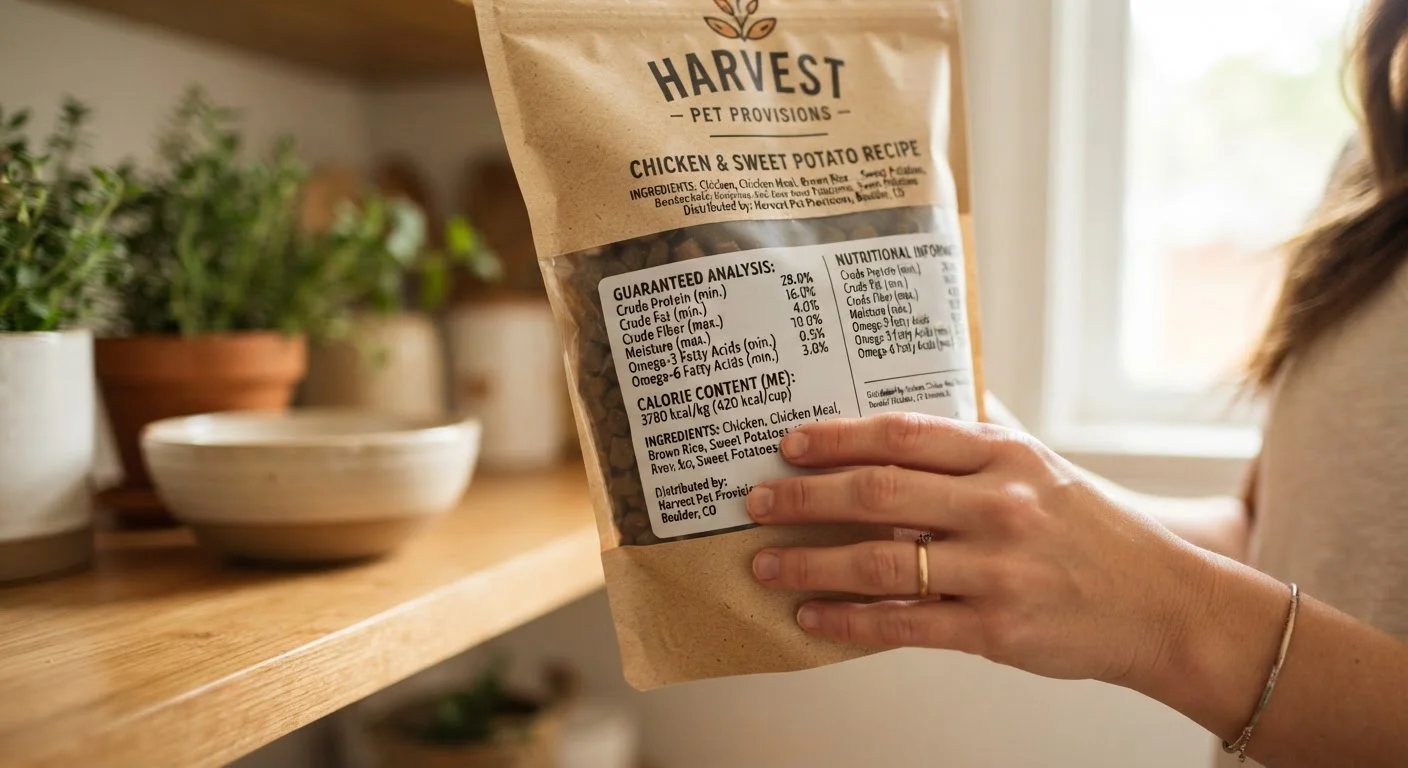
Pet food labels in the United States are regulated by the Association of American Feed Control Officials (AAFCO) and individual state feed control officials. Every label must include specific sections: the product name, net weight, manufacturer information, ingredient list, guaranteed analysis, nutritional adequacy statement, and feeding directions. Each section tells you something different, and none should be read in isolation. For a broader view of daily care decisions, see responsible daily pet ownership.
What you will need
Dissecting the Ingredient List
Ingredients are listed in descending order by weight before processing. This matters because whole meats — chicken, beef, salmon — contain significant water weight. Once cooked, a whole chicken ingredient may weigh considerably less than a dry ingredient listed below it, such as chicken meal. Chicken meal (dried, concentrated protein) is not inferior; it's simply already had moisture removed, so its pre-cook and post-cook weights are closer together.
Watch for ingredient splitting. A manufacturer can list "ground corn," "corn gluten meal," and "corn flour" separately. Each appears lower on the list individually, but combined, corn may outweigh the protein source listed first. This is a legal practice, but one worth recognizing.
Named protein sources — "deboned turkey" rather than "poultry" — give you more information about origin. "Meat by-products" are regulated ingredients (organ tissue, not hair, hooves, or feathers by AAFCO definition) and are not inherently harmful, though some owners prefer named organ meats for transparency.
Meal Ingredients Aren't Inferior
"Chicken meal" or "salmon meal" are concentrated, dried protein sources — not low-quality fillers. Because their moisture is already removed, they often contribute more protein per pound than whole-meat equivalents listed first. Judging an ingredient by name alone can be misleading.
Understanding the Guaranteed Analysis
The guaranteed analysis panel lists minimum percentages of crude protein and crude fat, and maximum percentages of crude fiber and moisture. These are not exact values — "minimum 26% crude protein" means the food contains at least that much, but potentially more. For precise nutrient comparisons across wet and dry foods, you'll need to convert values to a dry matter basis by accounting for moisture content.
To convert: subtract the moisture percentage from 100 to get dry matter percentage, then divide the nutrient percentage by that number and multiply by 100. For example, a wet food with 78% moisture and 8% protein on an as-fed basis contains roughly 36% protein on a dry matter basis — far more comparable to a dry food with 30% protein.
The guaranteed analysis does not tell you about ingredient quality, digestibility, or the bioavailability of nutrients. Two foods with identical guaranteed analyses can vary significantly in how well a pet actually absorbs and uses those nutrients. This connects closely to weight management in dogs and cats, where nutrient density and portion size both matter.
Guaranteed Analysis Has Limits
Nutrient percentages on the label reflect chemical analysis minimums and maximums, not digestibility. A food can technically meet protein minimums using sources that are poorly absorbed. If your pet has specific health conditions, work with your veterinarian to evaluate foods beyond the guaranteed analysis panel alone.
AAFCO Statements and Marketing Language
The nutritional adequacy statement is one of the most useful parts of a pet food label. It comes in two forms:
- Formulated to meet AAFCO nutrient profiles: The food was formulated on paper to meet established nutrient guidelines for a given life stage. No animals were fed the food during development.
- Animal feeding tests using AAFCO procedures: The food was fed to animals in a controlled study that met AAFCO protocols. This is generally considered stronger evidence of real-world adequacy.
Life stage designations — "growth," "maintenance," "all life stages" — are also regulated. "All life stages" must meet the more demanding puppy or kitten nutrient profiles, which means it may not be ideal for adult animals with lower caloric needs.
By contrast, front-of-bag claims like "holistic," "premium," "gourmet," and "human-grade" carry no standardized AAFCO definitions and are essentially unregulated marketing language. "Natural" has a limited AAFCO definition (no synthetic ingredients), but does not imply superior nutrition. For a deeper look at how nutrition myths shape buying decisions, see common myths about what pets can safely eat.
No Label Replaces Veterinary Guidance
Pet food labels provide useful information, but they cannot account for your individual animal's health status, allergies, or medical conditions. This article is general educational information, not veterinary advice. Always consult a licensed veterinarian before making significant changes to your pet's diet, especially for animals with chronic conditions, weight concerns, or life-stage transitions.
The content on this site is for informational purposes only and is not a substitute for professional advice. Always consult a qualified professional for guidance specific to your situation.