

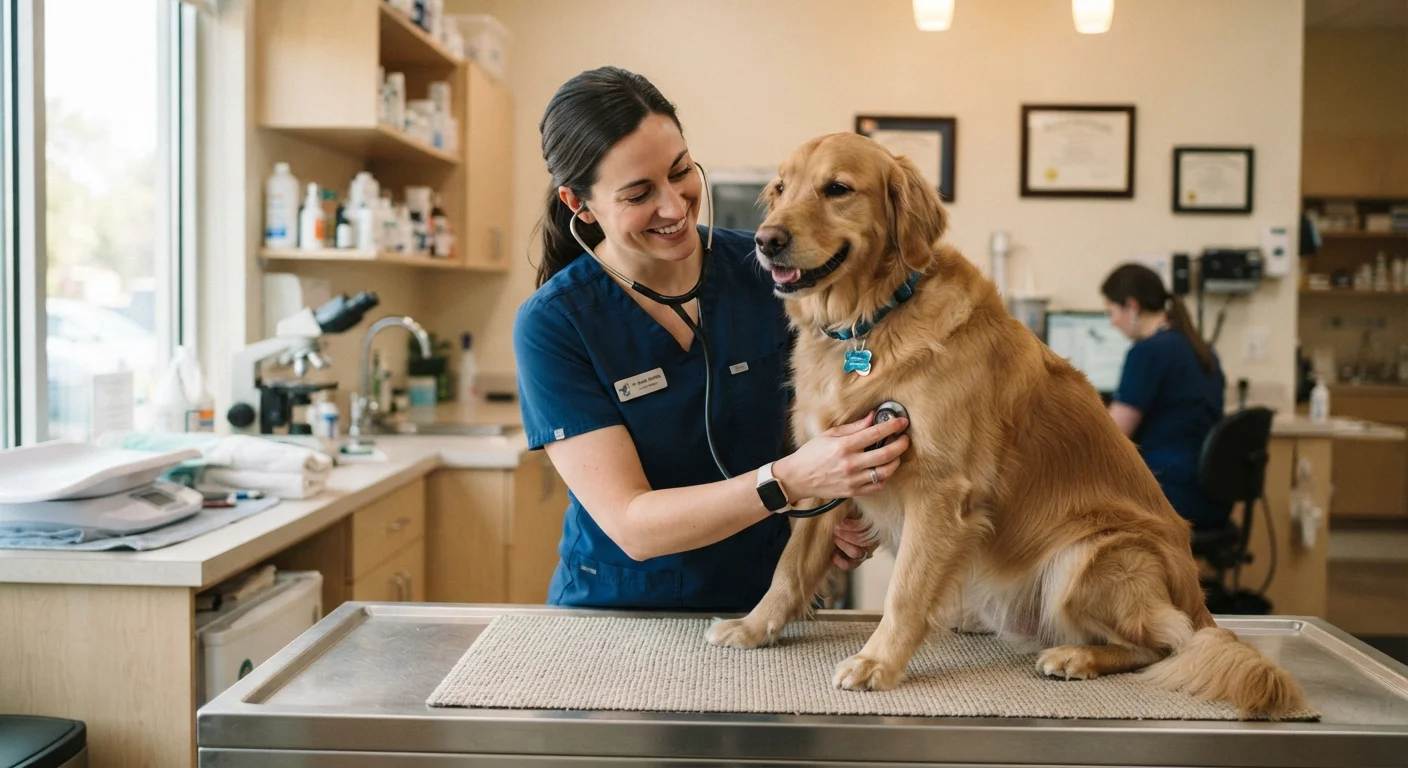
What a Vet Actually Does During the Exam
From the outside, a routine vet visit can look like a quick once-over. In practice, your veterinarian works through a structured physical assessment that evaluates nearly every body system in the span of a single appointment.
A typical wellness exam includes:
- Eyes and ears: Checking for discharge, redness, early signs of infection, or cloudiness that could signal developing cataracts.
- Mouth and teeth: Assessing tartar buildup, gum health, and signs of periodontal disease — one of the most common and underdiagnosed conditions in adult pets.
- Skin and coat: Looking for parasites, lumps, rashes, hair loss, or changes in texture that may indicate allergies or hormonal issues.
- Heart and lungs: Listening with a stethoscope for murmurs, irregular rhythms, or abnormal breath sounds.
- Abdomen: Palpating for organ size, tenderness, or masses that aren't visible externally.
- Weight and body condition score: Tracking trends over time, since gradual weight gain or loss can be an early indicator of metabolic or organ disease.
- Lymph nodes and musculoskeletal system: Feeling for swelling or signs of joint stiffness, especially in older animals.
Vaccination status and parasite prevention are also reviewed. Your vet will discuss which vaccines are due — for a deeper look at how vaccination schedules work, see Pet Vaccinations Decoded. Flea, tick, and heartworm prevention are similarly assessed — understanding your prevention options helps you have a more informed conversation at the visit.
Bring Notes, Not Just Your Pet
Jot down observations about your pet's eating, drinking, energy, and bathroom habits in the week before the appointment. Vets rely heavily on owner observations to interpret what they find during the exam. Even details that seem minor — like a cat drinking slightly more water — can be clinically meaningful.
Why Early Detection Changes Outcomes
Pets are remarkably good at masking discomfort — an evolutionary trait that can work against them in a domestic setting. By the time a cat or dog shows obvious signs of illness, a condition may already be in an advanced stage. Annual exams close that gap.
Conditions commonly caught early during routine visits include:
- Dental disease: Affects the majority of cats and dogs over three years old, yet it's rarely noticed at home until a tooth fractures or eating becomes painful.
- Heart murmurs: Often detectable by stethoscope years before a pet develops clinical symptoms of heart disease.
- Kidney and liver changes: Early shifts in organ function may show up in bloodwork before any outward signs appear, giving time to manage diet and slow progression.
- Lumps and masses: Caught during abdominal palpation or skin checks, these can be biopsied while small rather than discovered only after they've grown or spread.
- Obesity: A gradual weight increase of half a pound a year is easy to miss at home but straightforward to flag and address early.
Bloodwork Isn't Always Automatic
Not every wellness visit includes diagnostic lab work. Your vet will recommend bloodwork based on your pet's age, breed risk factors, and health history. For young, healthy adult pets, a physical exam alone may be appropriate. For pets over seven, annual bloodwork is commonly advised to establish organ function baselines. Ask your vet what's right for your pet's life stage.
The value of consistency matters here. A vet who sees your pet annually builds a baseline — they know what your animal's normal looks like, which makes deviations far easier to spot. A first-time vet has no comparison point.
As pets age, that baseline becomes even more valuable. Aging pets face a different set of health risks, and senior animals often benefit from more frequent monitoring.
Making the Most of Every Appointment
A wellness visit is a two-way conversation, not just a physical exam. Coming prepared helps you get more out of the appointment and gives your vet a fuller picture of your pet's daily life.
Before you go: Write down anything you've noticed — changes in water intake, bathroom habits, sleep patterns, activity level, or temperament. Even small shifts are worth mentioning. Bring a list of any supplements, foods, or medications your pet currently takes.
During the visit: Ask about body condition, dental health, and any age-appropriate screening tests your vet recommends. Don't wait to be prompted — if something has been on your mind, raise it.
After the visit: Follow through on any recommendations, whether that's scheduling a dental cleaning, adjusting diet, or returning for bloodwork. A note in your calendar for the next annual visit helps keep the routine on track.
Wellness care fits into the broader picture of responsible pet ownership. It sits alongside grooming — regular grooming also helps you spot early warning signs between vet visits. Together, these habits form the foundation covered in responsible daily pet ownership.
Annual exams aren't just about treating illness — they're about building a relationship between you, your pet, and a veterinarian who knows your animal well enough to notice when something isn't right. That relationship, built consistently over years, is one of the most practical investments a pet owner can make in their animal's long-term health.
80%
Dogs and cats with dental disease by age 3
According to the American Veterinary Medical Association (AVMA), the majority of pets show signs of periodontal disease by their third birthday — most without obvious symptoms.
2x/year
Recommended exam frequency for senior pets
AAHA guidelines suggest that pets aged seven and older benefit from wellness exams every six months to catch age-related changes early.
1 in 3
Pets estimated to be overweight or obese
The Association for Pet Obesity Prevention has consistently found that a substantial share of dogs and cats in the U.S. carry excess weight, a condition that's highly manageable when caught early.
Frequently Asked Questions
Vets perform a systematic physical exam that includes checking the eyes, ears, mouth, skin, coat, lymph nodes, heart, lungs, abdomen, and musculoskeletal system. They also review weight trends, discuss diet and behavior, and assess parasite prevention and vaccination status. The visit is a full snapshot of your pet's health.
Most healthy adult dogs and cats should visit a vet at least once a year. Puppies and kittens require more frequent visits during their first year for a series of vaccinations and developmental checks. Senior pets aged seven and older generally benefit from visits every six months.
Yes — many serious conditions, including dental disease, heart murmurs, kidney changes, and early tumors, produce no obvious symptoms until they're advanced. A wellness exam can detect these issues early when treatment options are broader and outcomes are better.
Routine bloodwork isn't automatically included in every wellness exam — your vet will recommend it based on your pet's age, history, and breed. When ordered, a basic panel typically checks kidney and liver function, blood cell counts, and blood glucose. Senior pets are more likely to have bloodwork recommended annually.
Bring any records from previous vets and a list of current medications, supplements, or diet changes. Note any behavioral shifts, changes in appetite, thirst, or bathroom habits to share with your vet. For anxious pets, a short car-ride practice or a carrier left open at home in the days before can reduce stress.
A wellness visit is proactive and scheduled in advance for a healthy pet — the goal is screening and prevention. A sick visit is reactive, prompted by a specific symptom or concern. Both are important, but wellness visits are the only way to systematically screen for conditions before symptoms emerge.
The content on this site is for informational purposes only and is not a substitute for professional advice. Always consult a qualified professional for guidance specific to your situation.