

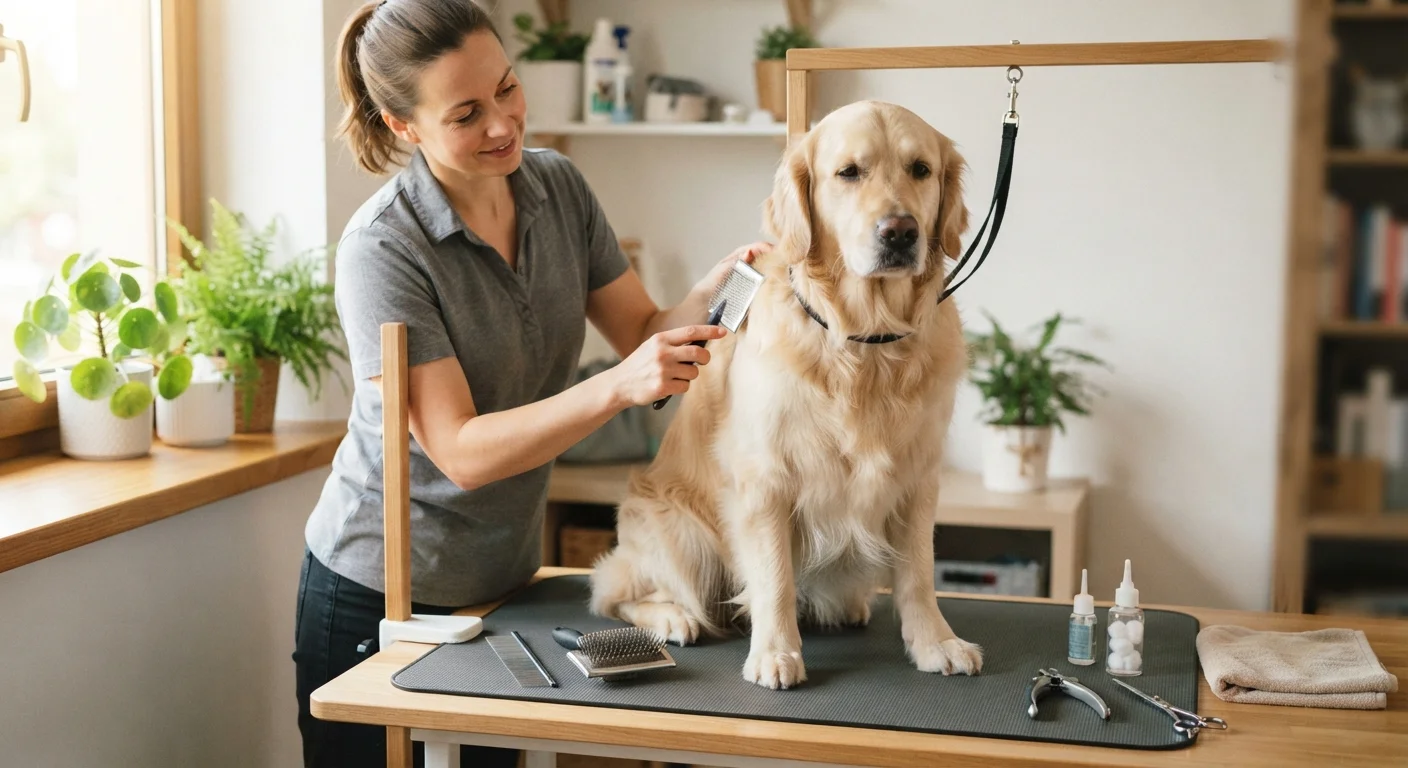
Why At-Home Grooming Matters
Consistent grooming does far more than keep your dog looking tidy. It maintains skin and coat health, prevents painful matting, reduces the risk of nail-related gait problems, and gives you regular, hands-on contact that can surface early signs of illness or injury. As outlined in our guide to what regular grooming actually does for animal health, routine sessions help you notice lumps, redness, or parasites before they escalate.
Most healthy adult dogs can have their nails trimmed, ears lightly cleaned, and coats brushed at home with minimal equipment and a calm approach. Building this into your schedule — even briefly — pays dividends for your dog's comfort and your confidence as an owner. See how grooming fits into a broader pet care routine that holds up under a busy schedule.
What you will need
Tools You'll Need
Using the right tools reduces the chance of injury and makes the process more comfortable for your dog. Avoid repurposing human nail scissors or cotton swabs — dog anatomy requires purpose-built equipment.
Dog nail clippers (guillotine or scissor style)
Designed to cut through canine nails cleanly without crushing, which reduces pain and splintering.
Styptic powder
Applied to stop bleeding immediately if the nail quick is accidentally cut.
Slicker brush
Removes loose fur, light tangles, and debris from most coat types.
Undercoat rake or deshedding comb
Reaches the dense undercoat on double-coated breeds to remove dead fur before it mats.
Veterinarian-approved ear cleaning solution
Loosens wax and debris in the ear canal for safe, gentle removal.
Cotton balls or gauze pads
Used to wipe the outer ear after applying cleaning solution — never inserted into the canal.
Non-slip mat or towel
Gives your dog stable footing during grooming, reducing anxiety from slipping.
Step-by-Step Grooming Instructions
Work through these steps in one session or split them across separate short sessions if your dog shows signs of stress. A few minutes of calm handling is always more productive than a rushed, stressful experience.
Set up your space and settle your dog
Place your non-slip mat on a stable surface at a comfortable working height. Let your dog sniff the tools before you begin. Offer a treat and practice touching paws, ears, and the coat briefly without doing anything else. This warm-up lowers arousal and signals that grooming time is safe.
Brush the coat thoroughly
Start brushing before nail or ear work, since it's the least invasive task. Work section by section, brushing in the direction of hair growth. For short-coated breeds, a weekly session is usually sufficient. Long-coated and double-coated breeds may need brushing several times per week to prevent matting. Pay close attention to high-friction areas: behind the ears, under the armpits, and around the collar.
As you brush, scan the skin for redness, flaking, bumps, or parasites. Finding something unusual here is a reason to contact your vet before proceeding with the rest of grooming.
Clean the ears
Lift the ear flap gently and inspect the visible canal. Healthy ears appear light pink, smell neutral, and have minimal wax. If the ear looks normal and your dog is not scratching or shaking their head, cleaning may not be needed every session — over-cleaning strips protective oils and can cause irritation.
When cleaning is warranted: apply a few drops of veterinarian-approved ear cleaning solution to the canal opening. Gently massage the base of the ear for about 20–30 seconds — you should hear a slight squelching sound as the solution loosens debris. Let your dog shake their head, then wipe the outer ear and the visible folds with a cotton ball or gauze. Never insert anything into the ear canal.
Trim the nails
Hold the paw firmly but gently. Identify the quick — the blood vessel running through the nail. On light-colored nails it appears as a pink shadow; on dark nails it is not visible, so trim small slivers at a time from the tip. The quick typically begins where you see a chalky white or gray circle appear in the cross-section of the nail as you cut. Trim at a slight angle, taking off only the hook-shaped tip.
Clip one nail, then reward. Take breaks between paws if your dog is tense. Aim to keep all four paws done within the same session if your dog tolerates it, but splitting across two sessions is perfectly fine.
Reward and close the session positively
End every grooming session with praise, play, or a high-value treat regardless of how smoothly it went. A positive final impression is the single most effective thing you can do to make the next session easier. Log what you completed and note any observations — changes in coat texture, ear odor, or nail condition — so you have a reference point for future sessions or vet visits.
Short, Frequent Sessions Beat Marathon Grooming
Dogs build tolerance for grooming much faster through brief, positive exposures than through long, infrequent sessions. Even five minutes of brushing paired with treats conditions a calmer response over time. This is especially important for puppies and dogs that were not socialized to handling early in life.
When to Call a Professional
At-home grooming is appropriate for most routine maintenance, but certain situations call for a professional groomer or veterinarian. Refer to our broader overview of responsible daily pet ownership for context on when to escalate care decisions.
- Severely matted coats: Attempting to brush out tight mats can tear skin. A groomer with dematting tools or clippers should handle these safely.
- Anxious or reactive dogs: If your dog snaps, freezes, or trembles consistently, a professional with behavioral experience can help condition a calmer response over time.
- Nail quicks that have grown long: When a dog's nails are very overgrown, the quick extends far into the nail. Gradual shortening over several sessions — or a vet visit — is the safest approach.
- Ear discharge, strong odor, or head shaking: These may indicate infection and require veterinary diagnosis, not more cleaning.
Skipping regular grooming is one of those small oversights that can undermine your dog's health over time. Building the habit now prevents the bigger problems later.
Know the Difference Between Dirty and Infected
A small amount of light-colored wax in the ear is normal. Dark brown or black debris, a yeasty or foul smell, redness, or swelling are signs of possible infection or parasites — not a grooming issue. Attempting to clean an infected ear at home can push debris deeper and delay appropriate treatment. Contact your veterinarian before proceeding.
This article is for general informational purposes only and is not a substitute for veterinary advice. If you notice any unusual symptoms — including skin irritation, persistent ear odor, or behavioral changes during grooming — consult your veterinarian.
The content on this site is for informational purposes only and is not a substitute for professional advice. Always consult a qualified professional for guidance specific to your situation.