

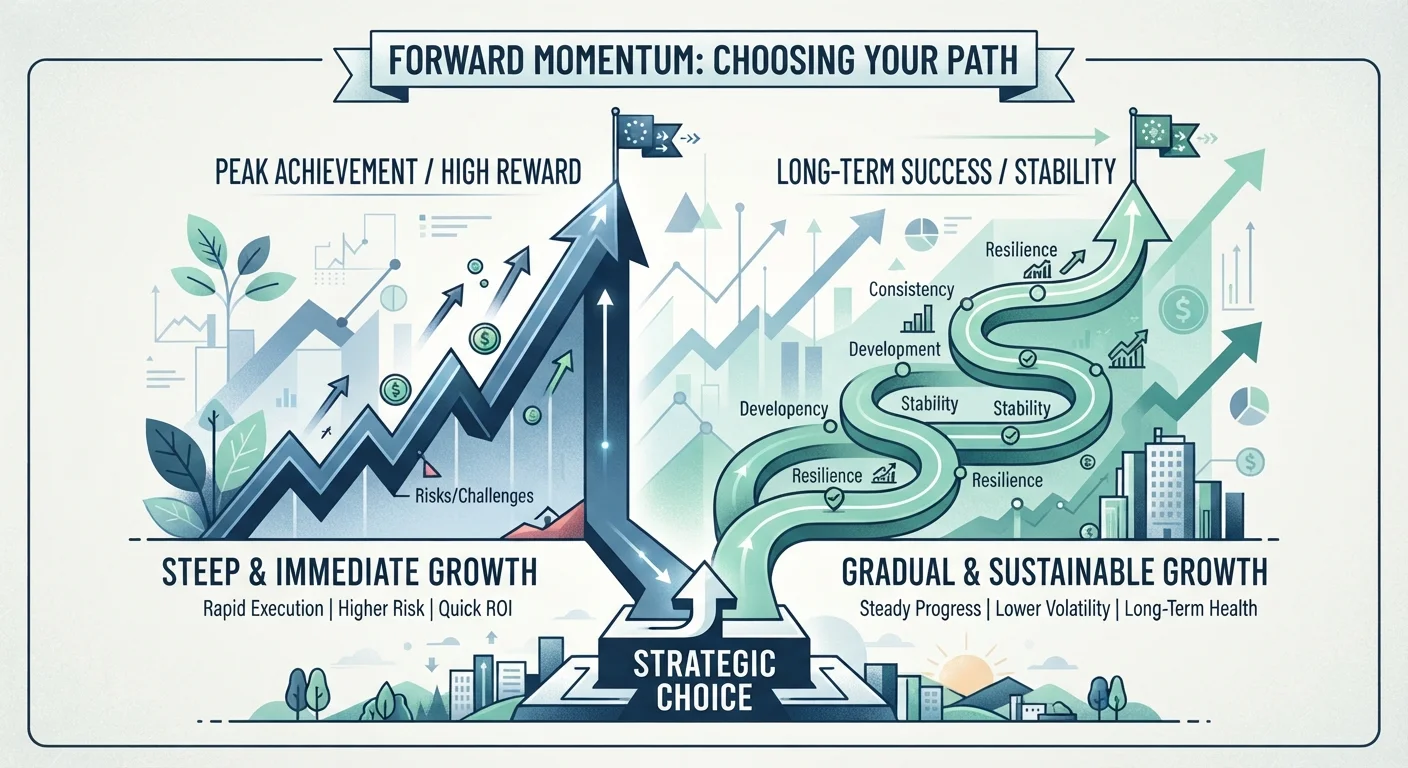
Option A
Debt Avalanche
The mathematically efficient, interest-minimizing approach.
Best for: Borrowers who are motivated by long-term savings and can stay disciplined without quick wins.
Option B
Debt Snowball
The psychologically rewarding, momentum-building approach.
Best for: Borrowers who need visible progress and emotional wins to stay on track with repayment.
How Each Strategy Works
Both the debt avalanche and the debt snowball are structured payoff frameworks. Each requires you to make the minimum payment on every debt you carry, then direct any remaining available funds toward one target debt. The strategies differ only in how that target is chosen.
With the debt avalanche, you rank your debts by interest rate — highest to lowest — and focus extra payments on the highest-rate balance first. Once that balance is eliminated, you roll its payment into the next highest-rate debt. The process continues until all debts are cleared. Because you're neutralizing the most expensive debt first, you reduce the total amount of interest that accumulates across your accounts. For a deeper look at why high-rate balances are particularly damaging, see how high-interest debt grows.
With the debt snowball, you rank debts by outstanding balance — smallest to largest — and attack the smallest balance first regardless of its interest rate. When that debt is gone, its payment rolls into the next smallest. The appeal is speed of completion: smaller balances can often be eliminated in weeks or months, providing a measurable sense of progress early in the process.
| Criterion | Debt Avalanche | Debt Snowball |
|---|---|---|
| Payoff order | Highest interest rate first | Smallest balance first |
| Total interest paid | Lower (mathematically optimal) | Potentially higher |
| Time to first payoff | Longer if top debt is large | Faster — smallest balance cleared first |
| Psychological motivation | Relies on long-term discipline | Early wins reinforce habit |
| Best rate environment | Wide spread between debt rates | Similar rates across debts |
| Minimum payments | Required on all other debts | Required on all other debts |
| Complexity | Requires tracking APRs carefully | Simple balance-based ranking |
The Real Cost Difference Between the Two Methods
The financial gap between the two strategies depends on the interest rates and balances involved in your specific debt picture. As a general principle, the greater the difference in interest rates across your debts, the larger the cost advantage the avalanche method holds. If your debts carry similar rates, the two strategies may produce nearly identical total interest costs.
~$1,000+
Potential interest savings with avalanche on mixed-rate debt
Illustrative estimates from personal finance educators suggest the gap between methods grows substantially when high-rate balances carry large principal amounts.
33%
Of U.S. adults carry credit card debt month to month
According to the Federal Reserve's Survey of Consumer Finances, a significant share of American households carry revolving balances, making payoff strategy a broadly relevant decision.
20%+
Average APR on new credit card offers
Federal Reserve data on consumer credit indicates average credit card interest rates have remained above 20% in recent reporting periods, underlining the urgency of targeting high-rate balances.
It's worth being clear about what neither strategy does on its own: neither method reduces your total debt faster than the other unless you're also increasing the total amount you put toward repayment each month. The difference lies entirely in how interest compounds while you work toward payoff. Consider reading about balancing debt repayment and savings if you're also trying to build an emergency fund simultaneously.
One practical note: if an avalanche strategy means your highest-interest debt also carries the largest balance, it could take a long time before you fully eliminate any single account. Some people find that discouraging. If that describes your situation, the snowball's early wins may be worth the additional interest cost — a judgment only you can make based on your own patterns of behavior.
Choosing the Right Method for Your Situation
Personal finance research consistently shows that the strategy people actually follow is more valuable than the theoretically optimal one they abandon. Both the avalanche and snowball approaches are credible frameworks — the question is which one aligns with how you actually make financial decisions.
Both Methods Require the Same Foundation
Neither strategy works without a reliable monthly surplus — money left over after essential expenses and minimum debt payments. If your budget is too tight to direct extra funds anywhere, the first step is identifying spending adjustments or income sources before choosing a payoff method. Review your budgeting basics to establish that foundation. Without a consistent extra payment, both approaches stall at the minimum-payment stage, which extends your payoff timeline considerably.
If you have a mix of high-rate credit card balances and lower-rate installment loans (such as student loans or an auto loan), the avalanche approach is generally the more cost-effective starting point. You can explore the broader tradeoffs between debt repayment and other uses of money in this guide on where to direct your money.
If you've made previous attempts at paying down debt that stalled, consider whether a lack of motivation — rather than a lack of income — was the limiting factor. For those borrowers, the snowball method's structured sequence of completions has a real behavioral value. It's also worth noting that these aren't the only paths: debt consolidation is a distinct approach with its own tradeoffs that some borrowers consider alongside these methods.
Whatever approach you choose, building it into a full repayment plan — with monthly targets and a clear account list — is the step that turns strategy into action. A debt repayment plan built from scratch can help you map each account and set realistic milestones. After clearing your debts, habits that keep debt manageable long-term are worth building early.
This article is for general informational and educational purposes only and does not constitute personalized financial, tax, or legal advice. Consult a qualified financial professional before making decisions about your specific debt situation.
The content on this site is for informational purposes only and is not a substitute for professional advice. Always consult a qualified professional for guidance specific to your situation.