

Our Verdict
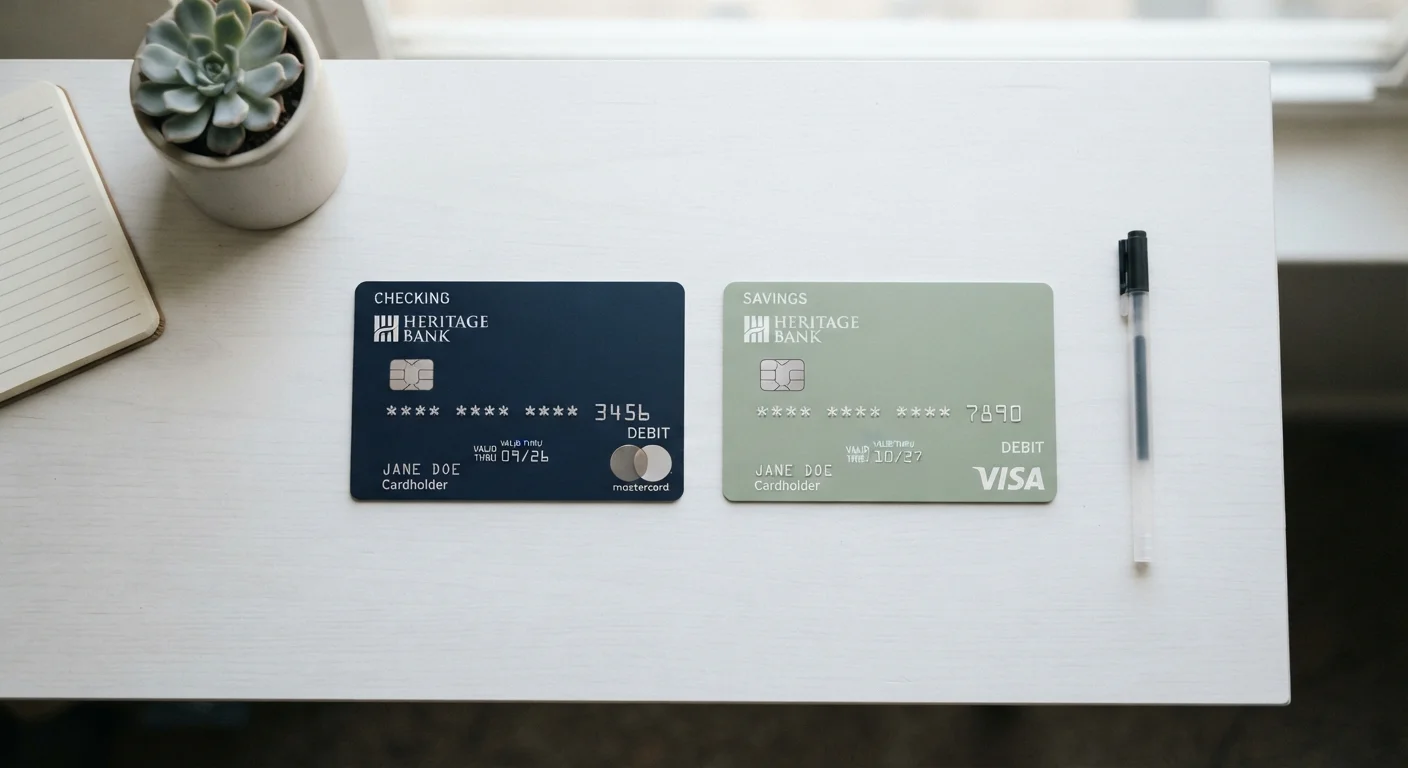
Checking and savings accounts are not competing products — they serve complementary roles in a sound personal finance strategy. A checking account handles daily spending and bill pay, while a savings account protects and grows money you're not using right now. Using both together gives you liquidity where you need it and growth where you don't.
| Best for | Recommended |
|---|---|
| Day-to-day spending, bill payments, and regular cash access | Checking Account |
| Building an emergency fund or saving toward a specific goal | Savings Account |
| Most everyday consumers managing both expenses and savings | Both accounts used together |
The Core Purpose of Each Account
At their most basic level, a checking account is a transactional account — it's built for money moving in and out regularly. Direct deposits land here, debit card purchases draw from here, and online bill payments process through here. Think of it as the operational hub of your financial life.
A savings account, by contrast, is a holding account. It's where money lives when it doesn't need to be spent immediately. Banks and credit unions typically pay interest on savings balances, so your money grows modestly over time. The rate of growth depends on the annual percentage yield (APY) — the effective annual rate of return — offered by your institution.
Neither account is inherently superior. They're engineered to do different jobs, and understanding that distinction removes a lot of confusion about how day-to-day banking actually works. For a broader introduction to how accounts function, see our plain-English banking introduction.
Key Differences Side by Side
The structural differences between these two account types go beyond just purpose. Access rules, fee patterns, and interest-earning potential all diverge in ways that affect how you should use each one.
| Checking Account | Savings Account | |
|---|---|---|
| Primary purpose | Daily transactions and spending | Holding and growing money over time |
| Earns interest | Rarely, and very low if so | Yes, via APY on balance |
| Debit card access | Standard feature | Generally not available |
| Withdrawal limits | Unlimited | Varies by institution; limits common |
| Common fees | Monthly maintenance, overdraft, ATM | Minimum balance, inactivity |
| Best used for | Bills, groceries, everyday purchases | Emergency fund, saving goals |
One important note on withdrawal limits: federal Regulation D historically capped savings account withdrawals at six per month, though the Federal Reserve suspended this rule in 2020. Many banks still enforce similar limits as an internal policy, so it's worth checking the terms at your specific institution.
Be aware that fees can erode whatever interest a savings account earns. Hidden fee structures in checking accounts are well-documented, but savings accounts carry their own cost risks too — including inactivity fees and minimum balance penalties.
How the Two Accounts Work Together
Most financial professionals suggest using both accounts in tandem rather than treating them as alternatives. A common approach: your paycheck deposits into checking, covering rent, utilities, groceries, and other regular expenses. A predetermined portion transfers automatically to savings each pay period — before discretionary spending takes over.
Automate Your Savings Transfer
Setting up an automatic transfer from checking to savings on payday removes the decision entirely. Even a small, consistent amount — transferred before you see it as available to spend — compounds meaningfully over time. Most banks allow you to schedule recurring transfers at no cost through their online portal or mobile app.
This structure creates a natural spending boundary. Money in your savings account is separated from your daily flow, which makes it psychologically and practically harder to spend on impulse. Over time, your savings balance builds toward an emergency fund — typically three to six months of essential expenses — or a specific goal like a vehicle purchase or home down payment.
If you're also working to pay down debt while saving, balancing both objectives simultaneously is a manageable strategy with the right framework. And if you're weighing whether to save versus invest or pay debt first, this breakdown of the key tradeoffs can help you think it through.
What to Look for When Choosing Each Account
When evaluating a checking account, the primary considerations are fee structure, ATM access, and overdraft policies. Monthly maintenance fees, minimum balance requirements, and out-of-network ATM charges can quietly cost you more than expected. Look for accounts that waive fees with direct deposit or maintain no-fee structures altogether.
For savings accounts, focus on the APY offered and any restrictions on withdrawals or balance minimums. Online banks and credit unions often offer higher APYs than traditional brick-and-mortar institutions because their operating costs are lower. Speaking of which — the type of institution matters too. Credit unions and banks differ structurally in ways that can affect the rates and fees you encounter.
Both account types at federally insured institutions are protected by the FDIC (Federal Deposit Insurance Corporation) for banks, or NCUA (National Credit Union Administration) for credit unions, up to $250,000 per depositor per institution. This makes them among the safest places to hold cash, even if they don't generate the returns associated with investing.
This article is for general informational purposes only and does not constitute personalized financial advice. Consult a licensed financial professional for guidance tailored to your individual circumstances.
The content on this site is for informational purposes only and is not a substitute for professional advice. Always consult a qualified professional for guidance specific to your situation.