

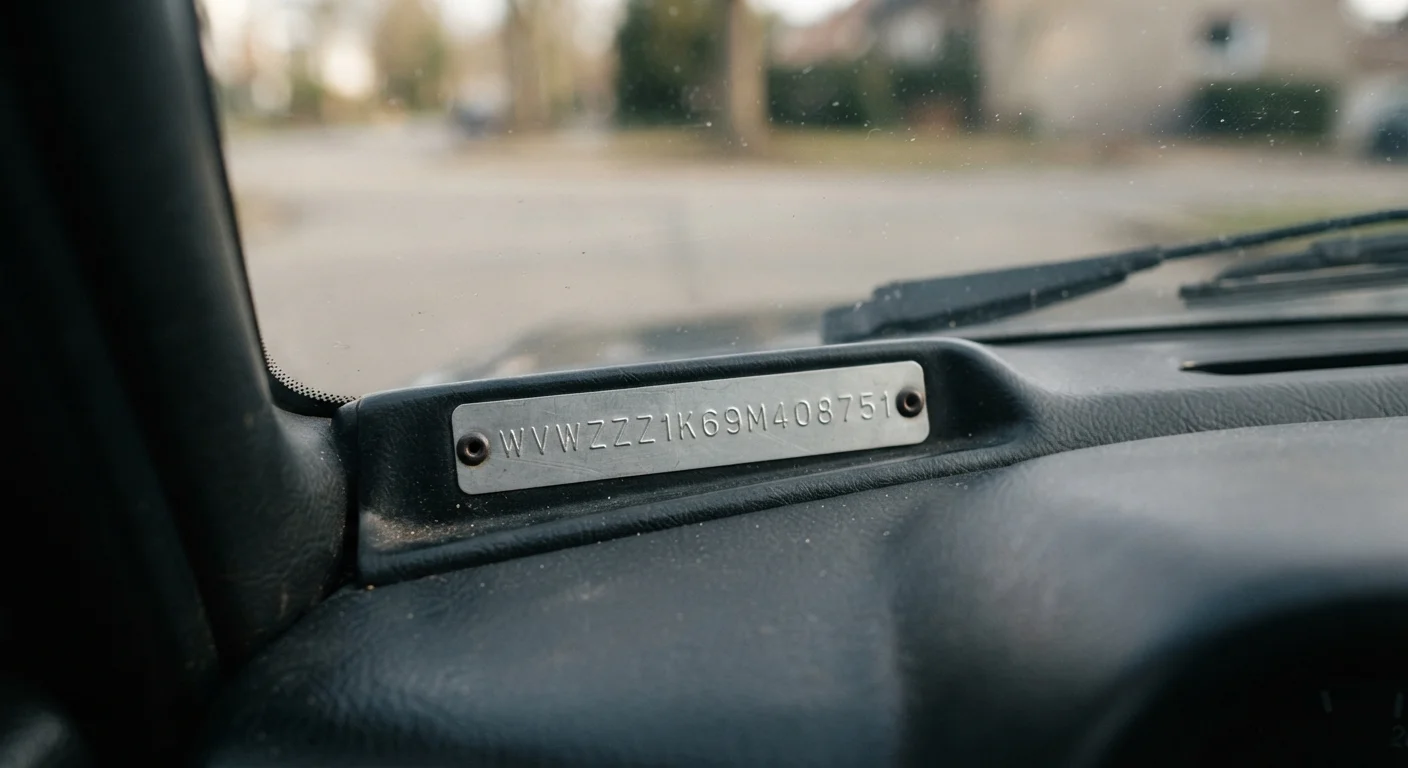
How a VIN Is Structured
A VIN's 17 characters are divided into three sections, each carrying specific meaning:
- World Manufacturer Identifier (positions 1-3): Identifies the country of manufacture and the automaker.
- Vehicle Descriptor Section (positions 4-8): Encodes vehicle type, body style, engine type, and restraint systems.
- Vehicle Identifier Section (positions 9-17): Includes a check digit used to verify the VIN's validity, the model year, plant code, and the sequential production number unique to that vehicle.
Understanding this structure helps you spot a fake VIN. If a character appears in a position that doesn't match the expected format - or if the VIN has more or fewer than 17 characters - treat it as a serious red flag.
VINs Didn't Always Have 17 Characters
Before 1981, manufacturers used varying VIN formats with different lengths and structures, making older vehicles harder to look up in modern databases. If you're researching a classic or pre-1981 vehicle, standard online VIN decoders may return incomplete or no results. Contact the manufacturer's heritage department or a marque-specific registry for older models.
What a VIN Report Can Tell You
Running a VIN through a history report service pulls records from multiple databases - state DMVs, insurance carriers, auto auctions, and law enforcement. Here's what a report commonly reveals:
- Title history: How many times the vehicle changed hands, and in which states.
- Title brands: Designations like salvage, rebuilt, flood, lemon law buyback, or junk - each of which affects value and insurability.
- Reported accidents: Collisions that generated an insurance claim or police report.
- Odometer readings: Recorded mileage at each title transfer, which can flag rollback fraud.
- Recall information: Open or completed safety recalls issued by NHTSA.
- Theft records: Whether the vehicle has been reported stolen.
1 in 5
Used vehicles with undisclosed damage history
Carfax has estimated that roughly one in five used vehicles on the market has undisclosed damage history that a buyer may not be aware of before purchase.
~27M
Open safety recalls on U.S. vehicles
NHTSA data has consistently shown tens of millions of vehicles on American roads with open, unrepaired safety recalls - many of which can be identified by VIN lookup.
This information gives you a meaningful starting point - but the keyword is reported. Every entry in a VIN history depends on someone having submitted that data to a trackable database.
What a VIN Report Cannot Tell You
This is where many used-car buyers get into trouble. A clean VIN report is reassuring, but it is not a guarantee of a clean car. Common gaps include:
- Unreported accidents: A fender-bender settled out of pocket between private parties generates no insurance record and leaves no VIN trace.
- Mechanical condition: Engine wear, transmission problems, rust underneath the body - none of this shows up in a database.
- Cosmetic repairs: Fresh paint, replaced panels, and interior refurbishment are invisible to a VIN report.
- Title washing: A salvage title issued in one state may not carry over if the car is re-titled in another state with looser laws.
- Fleet or rental history details: While some reports flag rental or fleet use, detailed maintenance records from those periods are rarely included.
Always Pair a VIN Report With a Mechanic's Inspection
Before finalizing any used-car purchase, budget for a pre-purchase inspection by an independent, licensed mechanic - ideally one you choose, not one affiliated with the seller. An inspection typically costs between $100 and $200 and can reveal mechanical, structural, and cosmetic issues that never appear in any database. It's one of the most cost-effective steps you can take.
In short, a VIN report tells you what was officially recorded. It cannot tell you what was deliberately hidden or simply never documented.
Using a VIN Check the Right Way
A VIN check is a smart first step - not a final verdict. Here's how to use it effectively as part of a broader due-diligence process:
- Verify the VIN matches: Confirm the number on the dashboard matches the door jamb, title, and any report you pull. Mismatches warrant walking away.
- Check recalls first - for free: NHTSA's official recall database at nhtsa.gov lets you enter any VIN at no cost to see open safety recalls.
- Review the title history carefully: Look for title brands, gaps in ownership timeline, or multiple state transfers in a short period.
- Order a history report: Use the report to identify red flags worth investigating further, not to declare the car problem-free.
- Hire a pre-purchase inspector: A qualified, independent mechanic can catch mechanical and structural issues that no database will ever reflect. This step is especially important for high-mileage vehicles or any car with a reported accident.
Used-car buying involves judgment calls, and a VIN report is one useful tool among several. Treat it as a starting point for questions, not a substitute for eyes-on evaluation.
This article is for general informational purposes only. Always consult a qualified mechanic or automotive professional before making a vehicle purchase decision.
Frequently Asked Questions
The most common location is the dashboard on the driver's side, visible through the windshield. It also appears on the driver's side door jamb sticker, the engine block, and official documents like the title and registration. Always cross-check that the VIN matches on multiple locations - discrepancies can signal tampering.
You can decode a VIN's factory specifications for free through NHTSA's website. Full vehicle history reports - which pull title records, reported accidents, and odometer readings - are available through third-party services that typically charge a fee. Some dealerships and automotive listing platforms offer complimentary reports.
Only if the flood damage was officially reported and a salvage or flood title was issued. Private-party incidents, damage repaired without an insurance claim, or title washing across state lines can all result in flood damage that never appears in a VIN report.
Title washing is the practice of re-registering a branded vehicle in a state with different titling laws, causing the salvage or damage designation to disappear from the title. This is a known gap in VIN reporting and is one reason a professional inspection matters even after a clean report.
VIN reports show ownership transfers that were officially recorded with a state DMV. Private sales that weren't properly documented or out-of-country ownership periods may not appear. The number of reported owners can be an undercount of actual owners.
The content on this site is for informational purposes only and is not a substitute for professional advice. Always consult a qualified professional for guidance specific to your situation.