

Water's Role Goes Far Beyond Quenching Thirst
Most people think of drinking water as a remedy for thirst and little else. In reality, fluid balance underpins nearly every system in the body. As part of a broader commitment to physical health from head to toe, understanding what hydration actually does can help you make more informed daily choices.
Water acts as a transport medium, carrying nutrients into cells and moving waste products out. It regulates body temperature through sweat and respiration, cushions joints and organs, and enables the chemical reactions that keep metabolism running. Without adequate fluid, these processes become less efficient - often in ways that show up before you ever feel thirsty.
~60%
Of the adult human body is water
According to established physiology research, water comprises approximately 60% of total body weight in average adults, though this varies by age, sex, and body composition.
1-2%
Fluid loss that can impair cognition
Multiple peer-reviewed studies have shown measurable declines in attention and working memory with fluid deficits as small as 1-2% of body weight.
20%
Of daily fluid intake from food
The U.S. National Academies of Sciences, Engineering, and Medicine estimates that approximately 20% of daily water intake in the American diet comes from food sources.
Cognition, Mood, and the Brain-Fluid Connection
The brain is particularly sensitive to fluid shifts. Research published in peer-reviewed nutrition journals has found that dehydration equivalent to just 1-2% of body weight can impair short-term memory, attention, and reaction time. Mood effects - including increased feelings of anxiety and fatigue - have also been documented at these mild deficit levels.
This matters in everyday life. If you find yourself losing focus by mid-morning or experiencing a midday slump, fluid intake is worth examining alongside other factors such as sleep and nutrition. The brain does not generate its own water; it relies entirely on what you consume.
Use Urine Color as a Quick Check
A practical way to gauge hydration throughout the day is to observe urine color. Pale yellow generally indicates adequate hydration, while dark yellow or amber suggests you may need more fluid. Clear urine can sometimes indicate overhydration, though this is uncommon in most healthy adults. This is a general indicator - not a diagnostic tool - and should not replace professional medical evaluation if you have concerns.
Digestion, Joints, and Temperature Regulation
Adequate hydration is necessary for healthy digestion. Water helps break down food, supports the absorption of water-soluble vitamins, and keeps the mucosal lining of the intestines functioning properly. Low fluid intake is one of the most common contributors to constipation, as the colon draws water from stool when overall fluid levels are insufficient.
In joints, fluid plays a structural role. Synovial fluid - the lubricant inside joint capsules - is largely water-based. Persistent low-level dehydration may contribute to joint stiffness, particularly during activity. For temperature regulation, sweat is the body's primary cooling mechanism, and its effectiveness depends on having adequate fluid reserves to draw from.
Practical Ways to Stay Better Hydrated
Waiting until thirst strikes is a reactive strategy. A more reliable approach is to build consistent fluid intake into daily routines - a glass of water with each meal, a reusable bottle within easy reach at work, and water before and during physical activity. Urine color remains one of the simplest self-monitoring tools: pale straw yellow generally indicates good hydration, while dark amber suggests you may need more fluid.
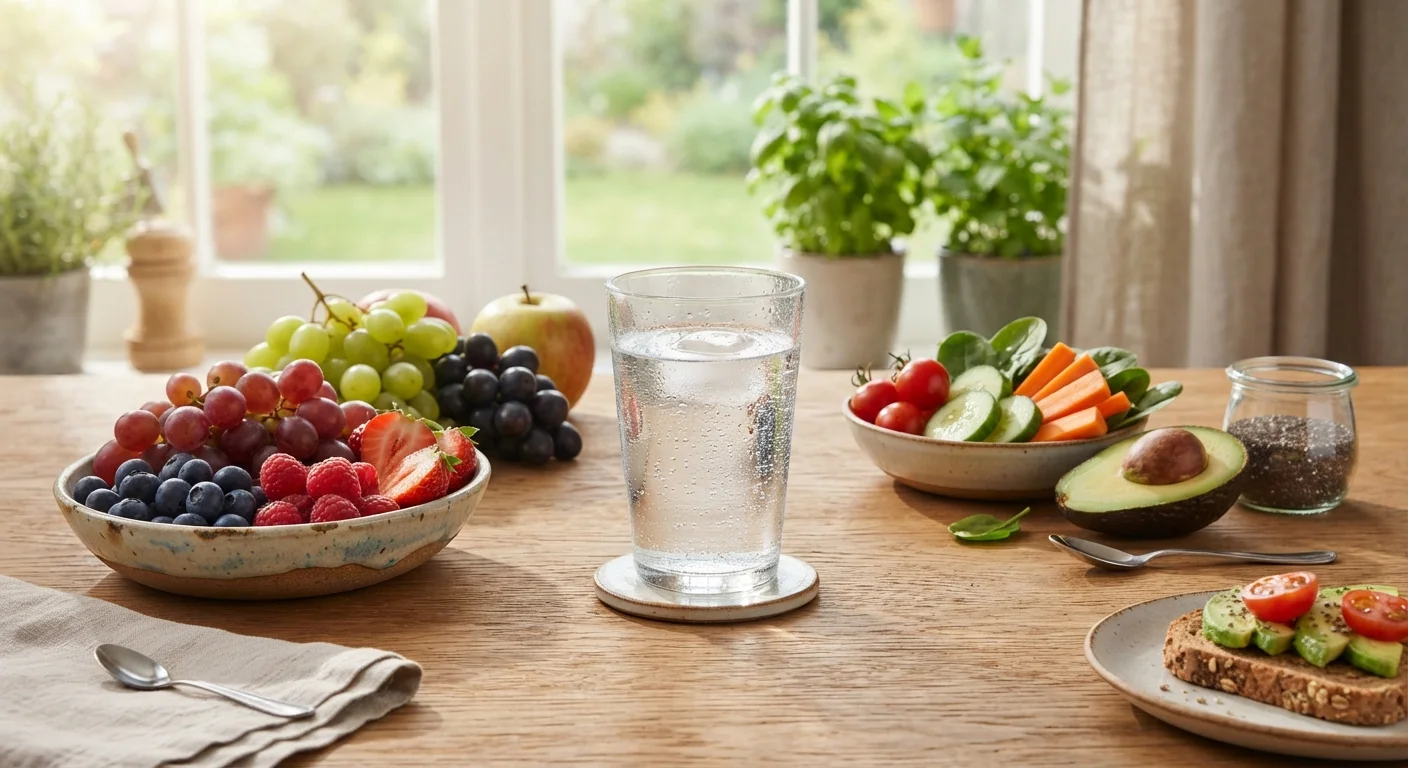
Food also contributes meaningfully to fluid intake. Cucumbers, watermelon, oranges, and leafy greens are composed largely of water. Incorporating these into meals and snacks adds to your total intake without requiring additional beverages.
Individual needs vary considerably. People who are physically active, live in hot climates, are pregnant or breastfeeding, or have certain medical conditions may require more fluid than average. For personalized guidance - especially if you have a health condition - consult a qualified healthcare professional.
This article is for general informational purposes only and does not constitute medical advice. Speak with a licensed healthcare provider for guidance tailored to your individual health needs.
Frequently Asked Questions
General guidance from health authorities commonly cites around 3.7 liters (125 oz) for men and 2.7 liters (91 oz) for women daily from all sources, including food. However, individual needs vary based on body size, activity, climate, and health status. A licensed healthcare provider can offer personalized guidance.
Yes. Overhydration, or hyponatremia, occurs when excess water dilutes sodium levels in the blood, which can become medically serious. This is uncommon in healthy adults under normal circumstances but can occur with extreme endurance exercise or certain medical conditions. Consult a healthcare professional if you have concerns.
Research suggests that caffeinated beverages like coffee and tea do contribute to overall fluid intake, despite their mild diuretic effect. The net hydrating effect is positive for moderate consumption. Plain water remains the most straightforward choice, but other beverages can supplement intake.
Early signs include dark-colored urine, reduced urine frequency, dry mouth, mild fatigue, and difficulty concentrating. Thirst itself is a relatively late indicator. Monitoring urine color - aiming for pale yellow - is a practical way to gauge hydration status.
Adequate hydration supports skin elasticity and can help maintain a healthy complexion, though topical moisturizers also play a significant role in skin barrier function. For more on how to care for your skin alongside internal hydration, see our guide on <a href="/style-beauty/beauty-basics/caring-for-your-skin-through-every-season">caring for your skin through every season</a>.
The content on this site is for informational purposes only and is not a substitute for professional advice. Always consult a qualified professional for guidance specific to your situation.