

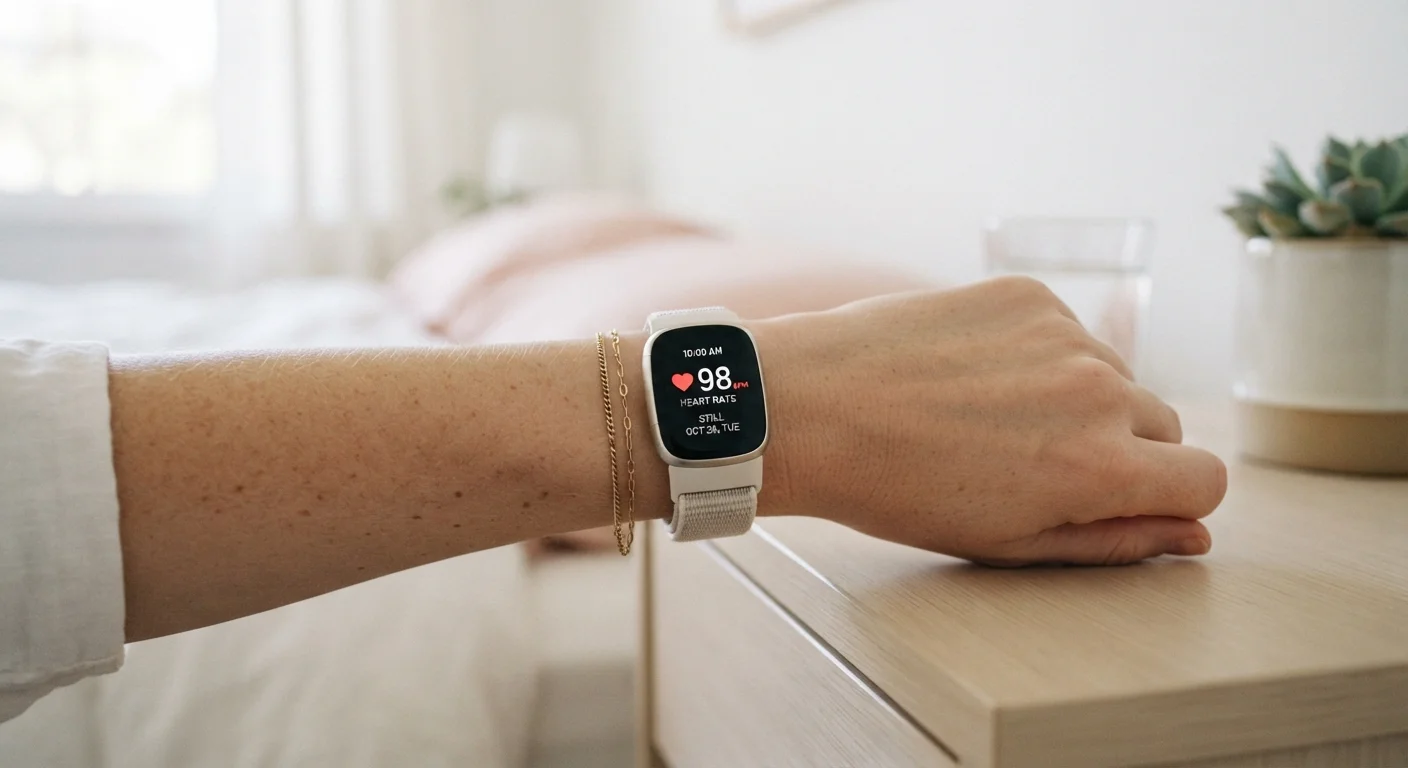
Why Your Resting Heart Rate Is Worth Paying Attention To
Most people only think about their heart rate during exercise. But what your heart does when you're doing nothing is equally informative. Resting heart rate (RHR) is a low-effort metric that reflects the cumulative effect of your sleep quality, fitness level, hydration, stress load, and overall cardiovascular health - all in a single number.
Large-scale population studies, including research published in journals like Heart, have found that higher resting heart rates are associated with greater risks of cardiovascular events, even among people without pre-existing heart disease. This doesn't mean RHR is a diagnosis - it means it's a signal worth understanding.
60-100 bpm
Normal adult resting heart rate range
Per American Heart Association guidelines for adults at rest.
~10 bpm
Heart rate rise per degree of fever
A well-established clinical observation used in acute illness assessment.
40-60 bpm
Typical RHR in endurance-trained athletes
Regular aerobic exercise increases stroke volume, reducing the beats needed to meet oxygen demand.
What's Normal - and What's Not
The American Heart Association defines the normal adult RHR range as 60 to 100 beats per minute (bpm). Within that window, lower is generally better. Well-trained athletes frequently sit in the 40-60 bpm range because consistent cardiovascular exercise strengthens the heart muscle, allowing it to pump more blood per beat and do the same work with fewer beats.
Outside that window, two clinical terms apply:
- Bradycardia: A resting heart rate below 60 bpm. In athletes, this is normal. In non-athletic individuals, especially if accompanied by symptoms, it warrants evaluation.
- Tachycardia: A resting heart rate above 100 bpm. Occasional elevation is common after caffeine, illness, or stress. Persistent tachycardia needs medical attention.
It's also worth noting that RHR tends to be slightly higher in women than in men on average, and rises gradually with age as the cardiovascular system becomes less elastic.
What Shifts Your Resting Heart Rate Day to Day
Your RHR is not static. Several everyday factors push it up or down, sometimes significantly:
- Sleep quality: Poor or insufficient sleep activates the sympathetic nervous system, keeping the heart rate elevated. Sleep disorders like sleep apnea are frequently associated with chronically elevated RHR.
- Stress: Psychological stress stimulates cortisol and adrenaline release, directly raising heart rate. Chronic stress has a measurable long-term effect on cardiovascular health.
- Hydration: Dehydration reduces blood volume, forcing the heart to beat faster to maintain circulation.
- Caffeine and alcohol: Both are stimulants that can transiently raise RHR; alcohol disrupts heart rhythm regulation, particularly during sleep.
- Illness or infection: A fever of just 1°F typically raises heart rate by approximately 10 bpm as the body works harder to fight infection.
- Medications: Beta-blockers lower RHR; stimulants and some decongestants raise it. Never adjust medications based on RHR readings alone - always consult your prescriber.
Track Trends, Not Just Individual Readings
Measure your resting heart rate at the same time each morning for at least a week before drawing any conclusions. A single high reading after a stressful day or poor night's sleep is not cause for alarm. It's a sustained, unexplained shift from your personal baseline that's worth investigating with a healthcare provider.
How to Track It Meaningfully
A single resting heart rate reading tells you very little. What matters is your personal baseline and how it changes over time. Measure under consistent conditions - ideally first thing in the morning, after waking but before getting up - and record readings across multiple days to establish a reliable average.
Consumer wearables and health tracking apps can be useful for spotting trends, though optical heart rate sensors in consumer devices are not clinical-grade instruments. Use them as a directional tool rather than a precise measurement. A manual pulse check remains the most accessible and accurate low-tech option.
Look for trends: a gradual downward drift as you build aerobic fitness is a positive sign. An unexplained, sustained rise - especially without a clear lifestyle cause - is worth mentioning to your doctor. As with any health metric, context and professional interpretation matter far more than any single data point.
This article is for general informational purposes only and does not constitute medical advice. Always consult a qualified healthcare professional about any concerns regarding your heart health or other medical conditions.
Frequently Asked Questions
Most medical guidelines define a normal adult resting heart rate as 60-100 beats per minute. Values below 60 bpm are common in physically fit individuals and are not automatically problematic. Values consistently above 100 bpm at rest - called tachycardia - are worth evaluating with a doctor.
Measure first thing in the morning before rising from bed, ideally after at least five minutes of lying still. Count the beats you feel at your wrist or neck for 60 seconds, or count for 15 seconds and multiply by four. Averaging readings across several days gives the most reliable baseline.
Yes. Psychological and physical stress both trigger the release of hormones like adrenaline and cortisol, which accelerate the heart. Chronic stress can keep your RHR elevated over time. See how this works in more detail in our article on <a href="/health-wellness/mental-wellness/the-science-behind-stress-what-happens-inside-your-body">the body's stress response</a>.
Generally, a lower RHR reflects better cardiovascular efficiency, but context matters. An unusually low heart rate accompanied by dizziness, fainting, or fatigue may indicate bradycardia and should be assessed by a healthcare provider.
Consumer wearables can provide useful trend data, but optical sensors are not medical-grade devices. They work best for tracking relative changes over time rather than precise clinical measurement. Always cross-reference with a manual count if accuracy is important.
Consult a healthcare professional if your RHR is consistently above 100 bpm, below 50 bpm without an athletic background, or if you notice a sudden, unexplained change accompanied by symptoms like chest discomfort, breathlessness, or dizziness.
The content on this site is for informational purposes only and is not a substitute for professional advice. Always consult a qualified professional for guidance specific to your situation.